

By Chisom Agali, Texas Academy of Mathematics and Science, University of North Texas, 2025
Abstract
This study evaluates the performance of chemical and electric propulsion systems for interplanetary cargo transfers, focusing on a Mars-bound mission scenario. Propellant mass requirements, mission feasibility, and efficiency trade-offs are analyzed for three representative propulsion technologies: a conventional chemical engine (R-4D), a Hall-effect thruster (SPT-140), and a gridded ion thruster (NEXT-C). Using the Tsiolkovsky rocket equation and published manufacturer data, the analysis demonstrates that electric propulsion significantly reduces propellant mass for long-duration transfers, though at the expense of lower thrust and higher electrical power demands. Implications for hybrid mission architectures, transfer duration, and future spacecraft design are discussed to support sustainable deep-space operations.
Introduction
Interplanetary missions require careful consideration of propulsion system performance, as the choice of engine directly affects spacecraft mass, mission duration, and operational flexibility. Conventional chemical propulsion provides high thrust but incurs significant propellant mass penalties for long-distance transfers [2]. Electric propulsion, including Hall-effect and ion thrusters, offers higher specific impulse and substantial mass savings [1, 4], though thrust levels are significantly lower and substantial electrical power is required. This paper conducts a theoretical comparison of chemical and electric propulsion for a representative Mars cargo mission. Using the Tsiolkovsky rocket equation and published engine parameters, the analysis evaluates mass fraction, thrust-to-power ratio, and total transit time. The goal is to quantify trade-offs between energy efficiency and mission duration and to determine optimal propulsion strategies under realistic mission constraints.
By clarifying the operational regimes in which each system excels, this study aims to inform future mission planning and contribute to the broader discussion of sustainable, scalable propulsion strategies for deep-space exploration.
Background and Theoretical Framework
The Tsiolkovsky rocket equation [2] governs spacecraft propulsion
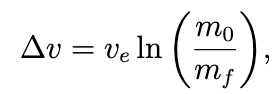
where ve is the exhaust velocity, m0 is the initial mass including propellant, and mf is the final mass after propellant expenditure. Exhaust velocity is related to specific impulse by
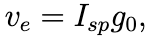
with g0 = 9.81 m/s2 [3]. Electric propulsion requires electrical power P to generate thrust T , approximated by
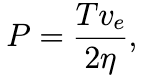
where η is propulsion efficiency [1].
Mission Architecture and Assumptions
Propellant mass requirements are evaluated for three representative propulsion systems under a single-stage Mars transfer maneuver with ∆v = 4,300 m/s and mdry = 2,000 kg. Power processing unit and solar array mass contributions are not included in the mass model and are addressed later to avoid system-specific variation. Performance data were obtained from official documentation: R-4D from Aerojet Rocketdyne [5], SPT-140 from NASA TM-97-206301 [7], and NEXT-C from NASA NEXT-C Fact Sheet [6]. The Tsiolkovsky rocket equation is applied as

where ve = Ispg0. Visualizations were created using Python and Matplotlib.
Methods and Data
Propellant mass is calculated using the Tsiolkovsky rocket equation. Performance data were sourced from NASA and manufacturer documentation. Calculations assume Δv = 4,300 m/s and a dry mass of 2,000 kg. Exhaust velocity is computed as ve = Isp g₀.

Results and Analysis
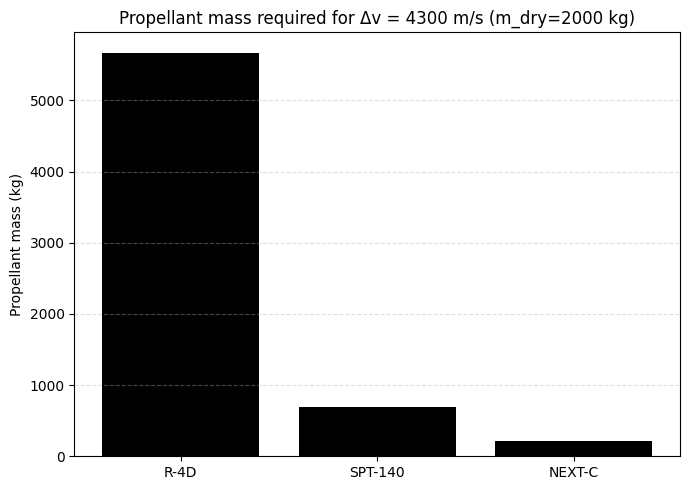
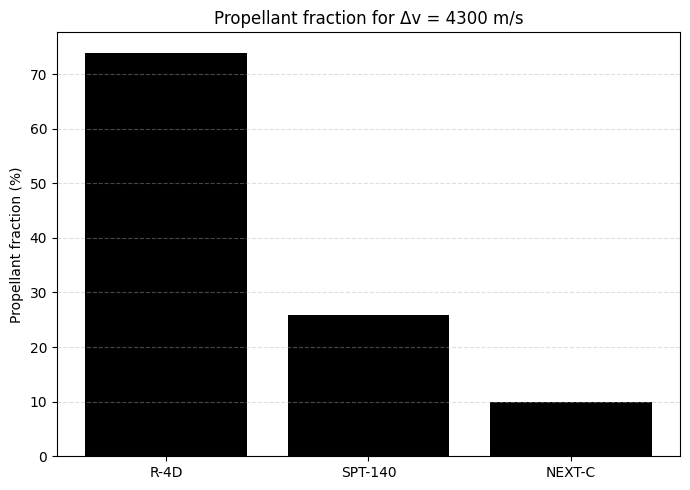
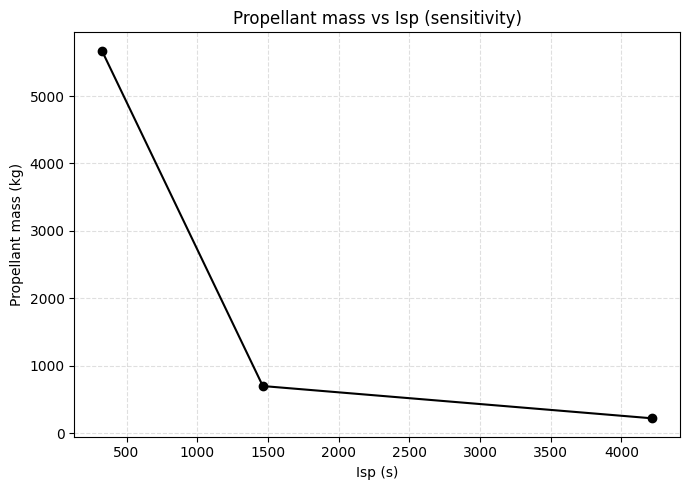
Figure 1 shows that the R-4D chemical system requires more than an order of magnitude higher propellant mass than electric propulsion systems. Figure 2 presents the corresponding propellant fractions. The NEXT-C ion engine requires less than 10% of its mass as propellant to complete the transfer, indicating considerable mass savings. Figure 3 illustrates the exponential sensitivity of propellant mass to specific impulse, demonstrating the inherent efficiency advantage of electric propulsion systems.While high-thrust chemical propulsion remains essential for rapid maneuvers such as planetary arrival or crewed transit, electric propulsion significantly reduces propellant mass at the expense of longer transfer durations. These mass savings are achieved by accepting lower thrust, which necessitates continuous acceleration and longer mission timelines.
Implications for Interplanetary Missions
Hybrid mission architectures combining chemical launch stages with in-space electric propulsion offer optimal flexibility. Cargo transfer missions, in particular, can leverage electric propulsion to drastically reduce launch costs through propellant mass savings. Crewed missions can benefit from prepositioned cargo using electric propulsion and faster chemical stages for human transport. Future advancements in solar electric propulsion, nuclear power availability, and high-thrust electric propulsion may further expand feasible interplanetary architectures.
Conclusion
This study demonstrates that propulsion selection critically impacts spacecraft mass, mission duration, and operational flexibility. Chemical propulsion provides unmatched thrust for time-critical operations but incurs high propellant penalties. Electric propulsion reduces propellant mass at the cost of low thrust and extended burn times. Future development in high-power electric propulsion and hybrid mission architectures will support sustainable long-term space exploration
References
[1] Goebel, D. and Katz, I., Fundamentals of Electric Propulsion. JPL SciTech, 2008.
[2] Sutton, G. P., Rocket Propulsion Elements. 9th Edition, Wiley, 2018.
[3] NASA, “Basics of Space Flight,” Accessed 2025.
[4] MIT Electric Propulsion Group, “Electric Propulsion Overview,” Accessed 2025.
[5] Aerojet Rocketdyne, “R-4D Datasheet,” 2021.
[6] NASA, “NEXT-C Fact Sheet,” 2021.
[7] Manzella, D. et al., “Performance Evaluation of the SPT-140,” NASA TM-97-206301, 1997.
PDF Download
A PDF version of this article is available for download: mars-cargo-transfers-propulsion-mass-tradeoffs-research-paper.pdf
About the Author
Chisom Agali is a senior at the Texas Academy of Mathematics and Science at the University of North Texas, specializing in physics. She conducts research in astronautics, physics, and inorganic chemistry, focusing on space systems and advanced materials. She plans to pursue undergraduate studies in physics or astronautics.