
[Authors: *Bryan Wang, *Louisa Xu, *Aryakrishna Kanakamedala, *Tamoghna Naladala, *Abhinav Gopalkrishnan, *Serene Wang, *Sanjana Viswaprabakaran, *Saharsh Tavva; *University of North Texas]
Abstract
As the human population continues to grow, an uncertain future on Earth has given rise to the idea of space settlements, a necessary step if humanity is to move to accommodate its growth. Some of these space settlements may revolve around a body in space, presenting their challenges as opposed to traditional long-term settlements located on a planet’s surface. For example, the design and operation of a dual-structure space colony that resides in low and high Mars orbit poses complex requirements for materials selection and gravitational strategies for multi-rotating cylindrical space habitats. However, such a structure suspended in space provides versatility in supporting planet settlements and facilitates intersystem trade and logistics. As such, the aforementioned dual station colony is relevant for further space exploration and expansion. A potential space settlement requires architecture that efficiently compartmentalizes residential, industrial, and commercial sectors, providing permanent residents with an optimized living experience that satisfies everything from basic needs, such as sustainable food and water, to healthcare and integrated communities. The high-Mars orbit colony features two counter-rotating rings, each comprising several self-sustaining sectors that incorporate natural elements, such as greenery and tree-lined roads, to optimize psychological well-being while encouraging community engagement and providing a more familiar experience for onboarded new residents. These rotating rings simulate gravity through centrifugal force. The modular design of the colony enhances operational efficiency, so residents will be able to access their jobs and perform repairs easily. The compartments are physically connected; however, airlocks and other failsafe measures are in place to ensure an incident in one sector will not risk the safety of those in other modules. Material selection for the rings prioritizes strength and adaptability, ensuring the structure can handle a continuous flow of interplanetary ferries and transport vehicles. The high port features a state-of-the-art space terminal. A smaller counterpart in low Mars orbit serves as a hub for interplanetary logistics and material preparation, supporting Martian exploration. Together, the design and material strategies of this space structure represent the future of sustainable space habitation, and the innovative materials and construction processes are critical to the future development of such a project.
Overall Structure and Exterior Design
The general structure of the settlements combines cutting-edge materials and construction techniques. A prospective settlement such as the one mentioned in the introduction is likely to comfortably contain ~15,000 permanent residents with a variable number of temporary visitors conducting business or in transit to planetary bodies. As a result, not only does housing need to be provided for a large population, but also accompanying support infrastructure and artificial gravity for a comfortable and familiar living environment. As such, a cylindrical structure is ideal for both providing a high-volume space and generating artificial gravity. The development plan for the settlement consists of a central cylindrical tube surrounded by two rings, each ring containing living and mostly autonomously controlled industrial sectors (Figure 1). A center tube is ideal for the movement of goods, as the simple infrastructure and lack of human presence in the structure are perfect for automated systems to handle logistics and deliveries to storage facilities in the settlement. Transitional shafts connect the center of the settlement with the outer rings for ease of access and structural integrity, ensuring that the connection between the mostly automated logistics sector and residential regions is maintained. Pressurization chambers (through Airlocks) allow safe movement between the pressurized living area and the central logistics corridors.
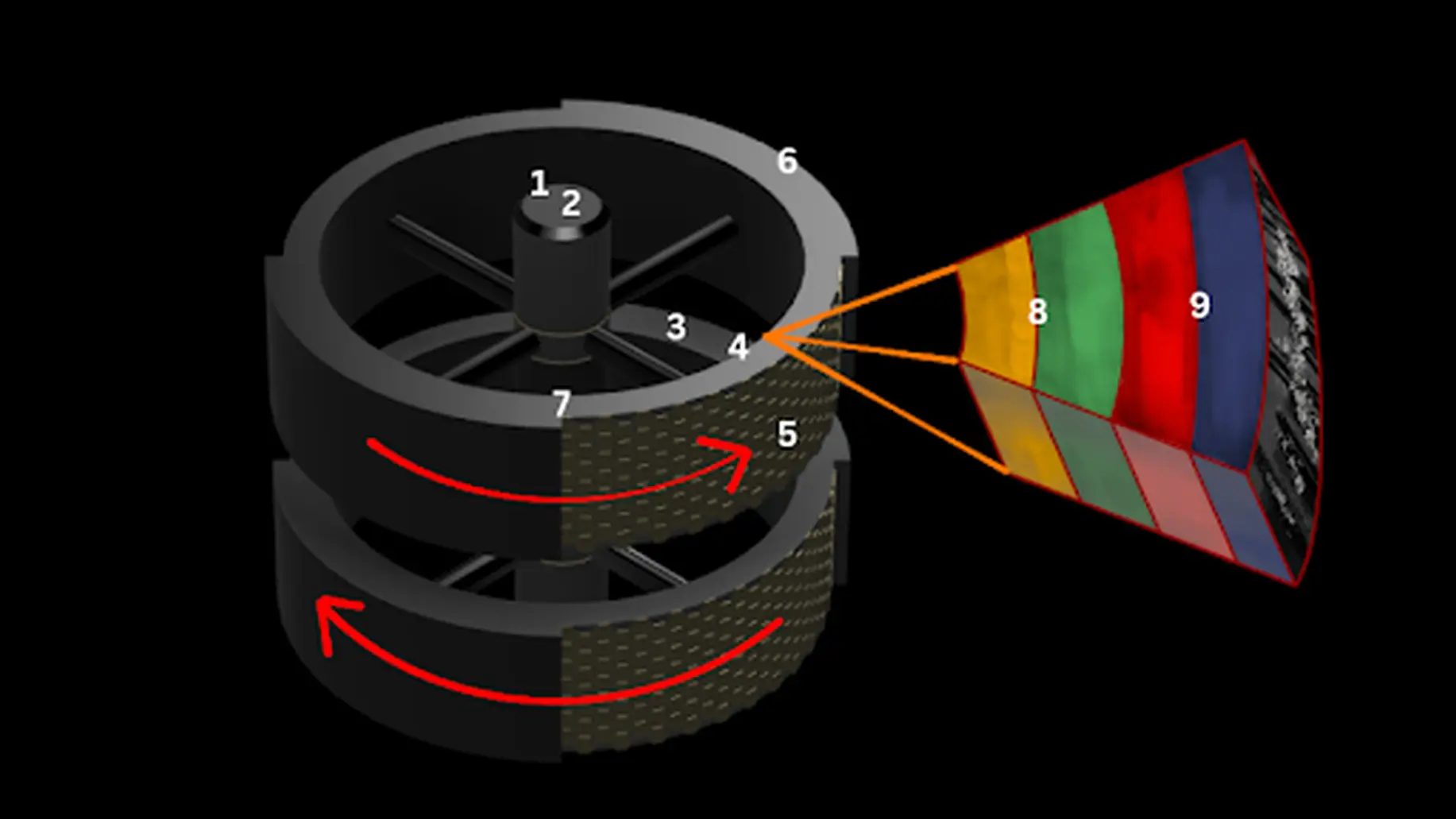
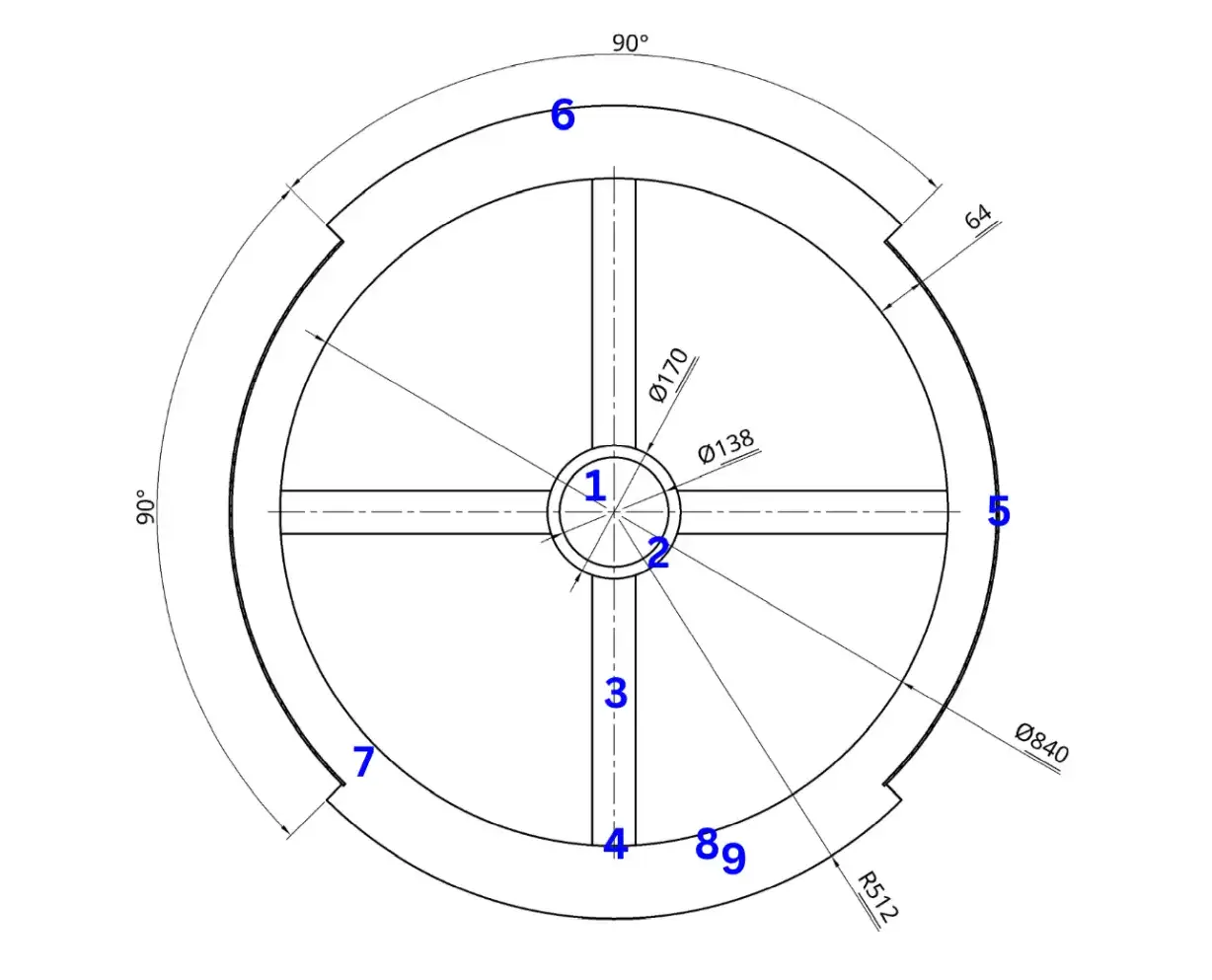
The outer shell of the structure houses a large solar panel array that provides sustainable power for the settlement (Figure 1.5). Contrarotating rings, represented by red arrows in Fig. 1, ensure the stability of the entire settlement in orbit. Rings are pushed into rotation through thrusters. Backup systems play a crucial role in enhancing safety, particularly in power generation. Excess energy is stored in advanced battery systems, able to be redistributed across critical sectors during emergencies. In addition, the exterior features an array of docking stations and ship terminals that allow ships and shuttles to easily access the settlement, enabling the transfer of people efficiently (Figure 1.6). These are in contrast to the previously mentioned cargo tunnels, as the direct access on the outside of the residential rings assists with convenience for external visitors. The modular design of the entire area ensures that if any part of the settlement needs to be isolated or temporarily shut down, the systems in place—such as airlocks and dividers—can efficiently separate affected areas, minimizing the risk of further complications or damage. The industrial floor area is the backbone of production. All the agricultural activity, storage, and water treatment are housed here, which allows the entire settlement to function. The separation between these floors (represented by Fig. 1.8) and the residential area (Fig. 1.9) again focuses on the safety of the residents. Energy production, industry, and agriculture are handled in this space, maximizing efficiency in a limited area. Floor area is valuable, and the usage of hydroponics for the growth of crops also ensures the reuse of limited water resources in a compact space. Logistics corridors lead directly to the industrial section of the rings, and passenger terminals are directly connected to the residential floors of the settlement. Advanced automation systems are present across all sectors, such as the automated transport vehicles that deliver supplies to the settlement’s storage facilities, and the automatic packing and sorting of goods in these facilities.
An accompanying “low port” orbiting closer to Mars, or another body, would include infrastructure to facilitate the transport of goods onto and off the planet.
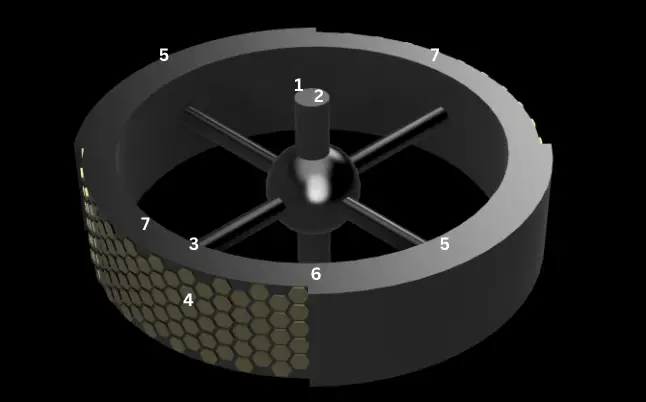
The overall structure of this station is similar to that of the general settlement. A central region represents the logistics and docking centers for this port, and the outer ring contains a relatively small residential area housing only non-permanent residents (workers) working in the logistics sector (Figure 2). As the purpose of this port is solely to facilitate logistics, it does not contain any permanent residents and is highly automated, requiring only a small human crew. As such, the dimensions of the structure are greatly reduced compared to the general settlement, but it is still crucial to the two-part system.
The dimensions of the general settlement provide sufficient space for all required purposes.
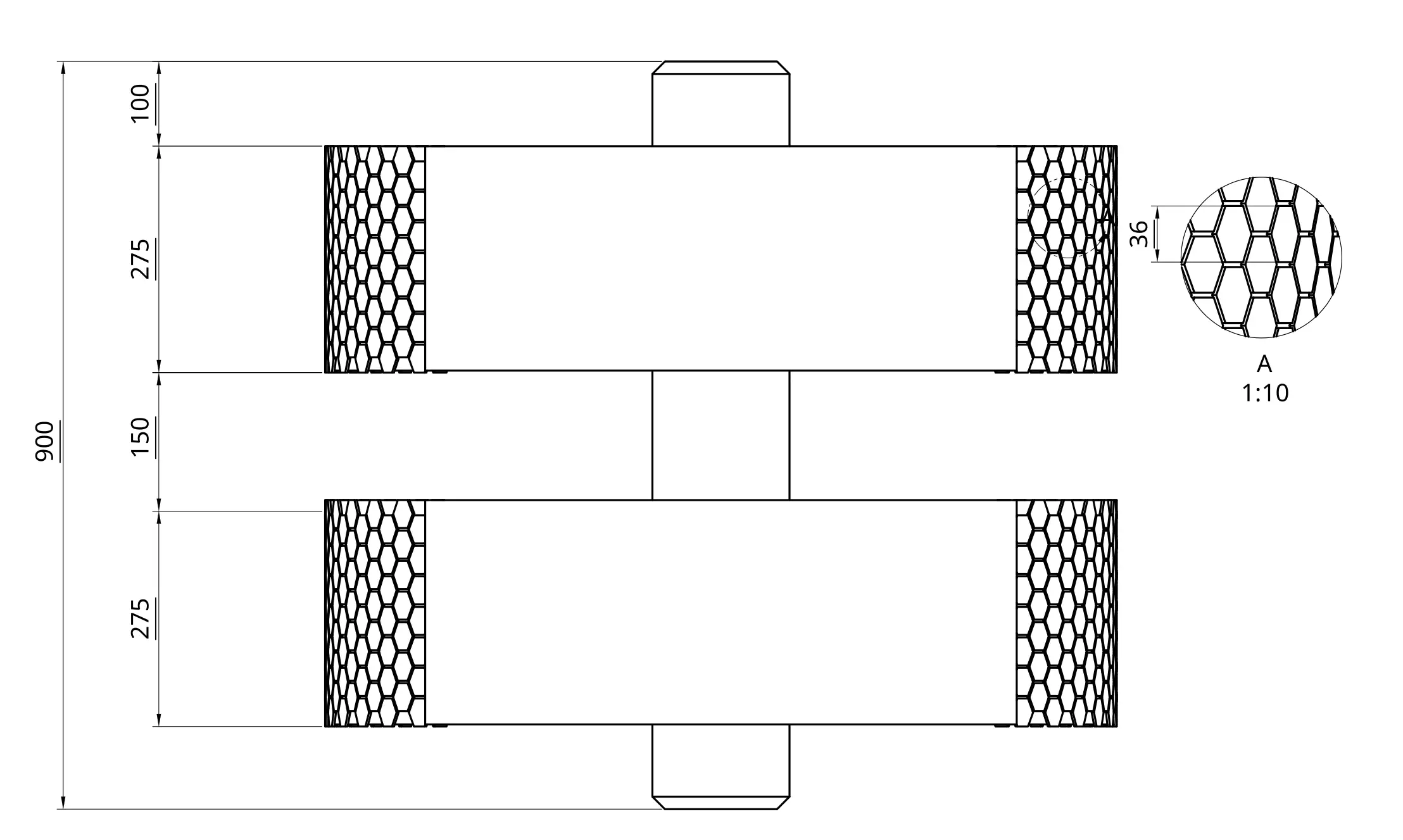
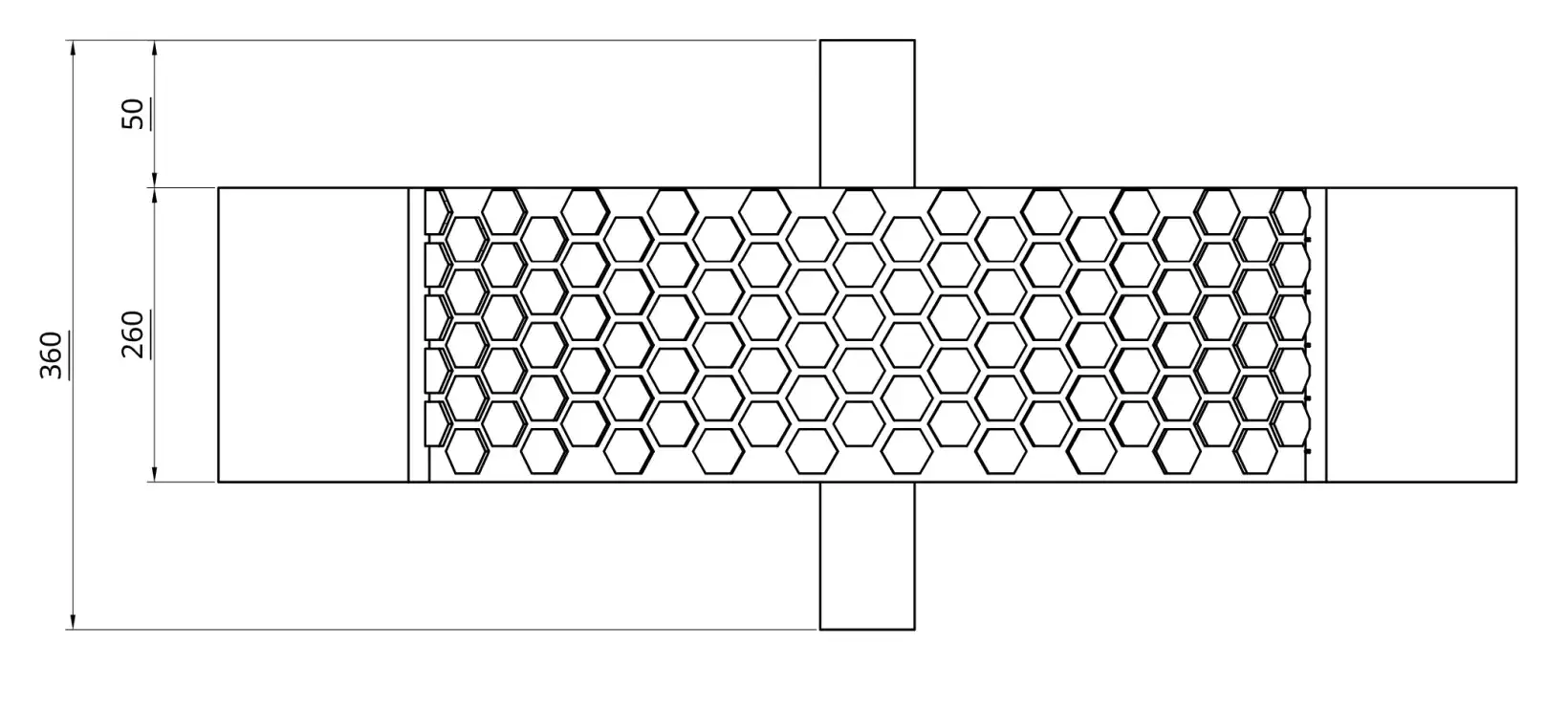
The dimensions for the rings and the central tube structure are provided in Figure 3. Volume and surface calculations ensure optimal configuration and will be discussed more in-depth in the following section regarding hull materials.
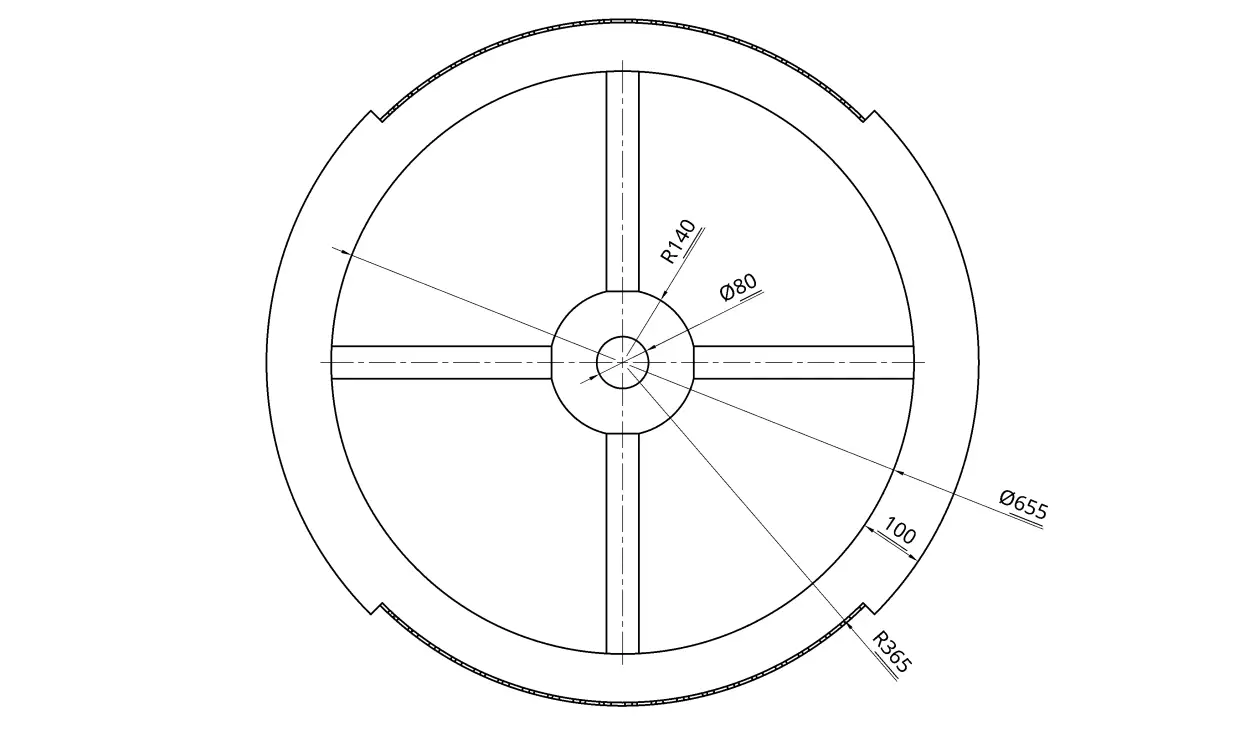
The dimensions of the low port shown in Fig. 6 show the difference in size in comparison to the general settlement.
Hull Structure and Window Mats
The hull of both structures is composed of multiple layers of advanced materials to protect from outside elements such as debris and radiation.
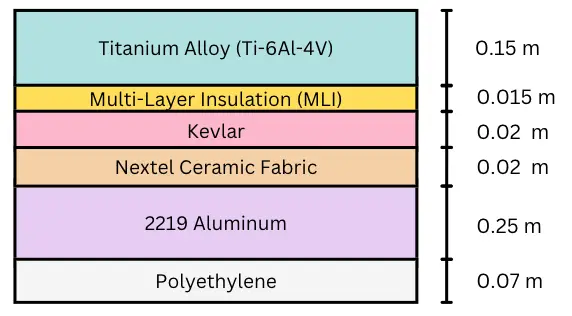
The hull is 0.525 meters thick and composed of Titanium alloy, multi-layer insulation, Kevlar, Nextel ceramic fabric, aluminum, and polyethylene. From the inside, the Titanium Alloy is used for structural integrity [1]. The multi-layer insulation is composed of aluminized mylar, which helps with thermal regulation and solar radiation reflection [2]. Kevlar was chosen for its resistance to high velocity impacts and absorption of micrometeoroid impact shocks [3]. Nextel ceramic fabric was used for heat shielding and additional impact dispersion [4]. 2219 Aluminum is used for secondary structural support and radiation attenuation [5]. Lastly, on the outside, polyethylene is used for lightweight cosmic ray shielding and hydrogen-rich neutron absorption [6].
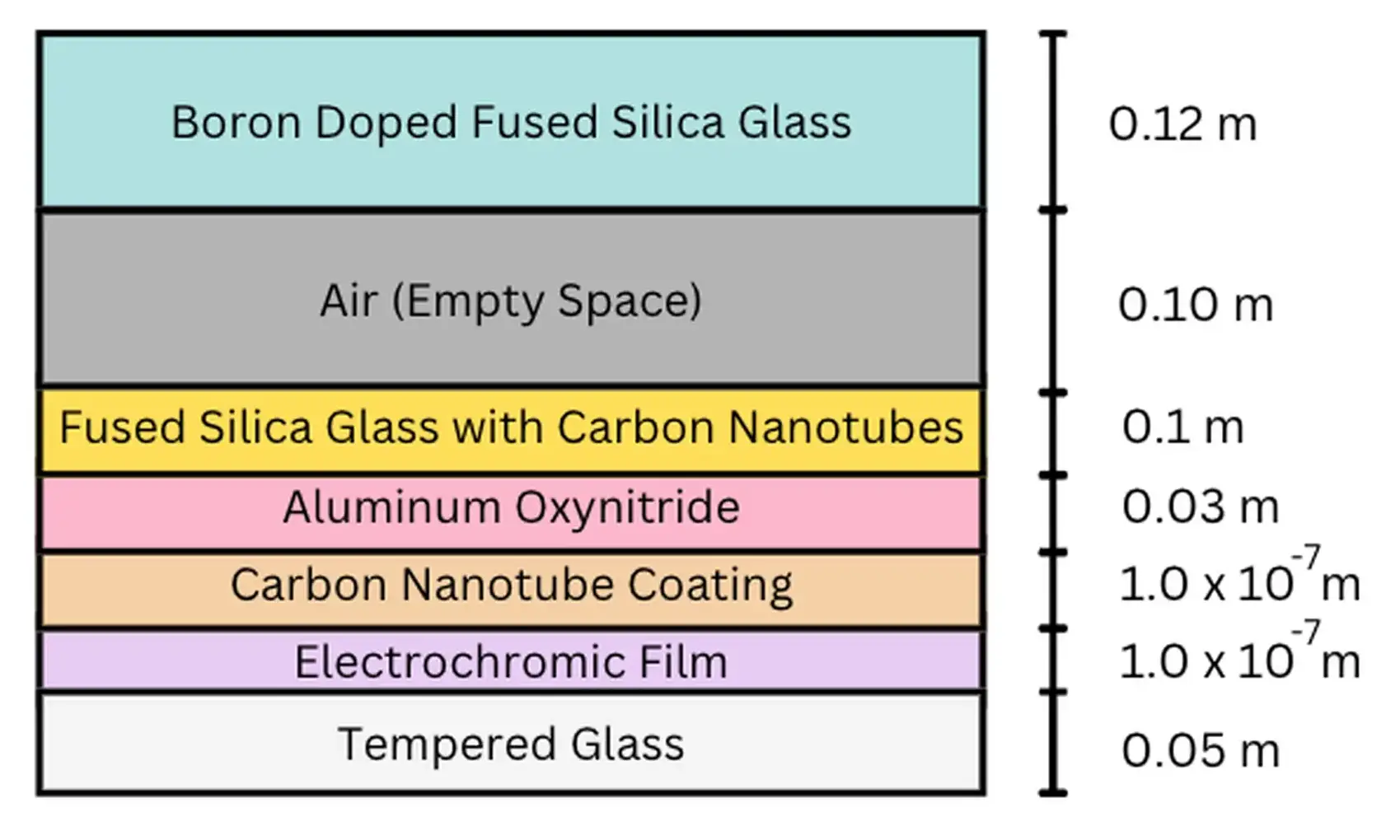
The window is around 0.3 meters thick and is composed of various glasses, carbon nanotubes, and electrochromic film. From the inside, tempered glass is used for pressure containment as the last line of structural integrity. Electrochromic film is used for adjustable light transmission for glare control [7]. A carbon nanotube coating is used to prevent static charge buildup and as secondary radiation shielding [8,9]. Aluminum oxynitride (ALON) is used for micrometeoroid and debris impact resistance [10]. Fused silica glass with carbon nanotubes is used for structural reinforcement and radiation dissipation [11]. Lastly, on the outside, boron-doped fused silica glass is used for first impact absorption and neutron radiation shielding [12, 13].
Construction Process
The construction process is split into six general steps. For Phase 1, all materials are shipped to the building location of HighPort and are held in orbit. Scaffolding is put up by robots in preparation for the construction of the cylindrical center of HighPort. Once scaffolding is complete, construction moves into Phase 2.
In Phase 2, robots assemble the entirety of the central column and install horizontal trusses within the cylinder that provide support to the spokes that will eventually connect with the outer rings. Tubes for the transitional tunnels are extended outwards from the center in both the “top” and “bottom” layers. Scaffolding is removed.
In Phase 3, construction of opposite sections of each ring begins at HighPort, where 2 sections of each ring are completed simultaneously. An additional set of transitional transportation tunnels is added to each ring in order to provide extra rigidity, but also allows pressurization of HighPort with airlocks. Thrusters are then attached to HighPort, with each ring rotating in opposite directions, which slowly accelerates the station, generating artificial gravity. At this point, human workers can be transported to the settlement to begin work on the interior of the structure. Industries were installed to provide initial power. Construction material is shipped to the Mars-Port building location.
In Phase 4, once some furnishing of the interior of HighPort has been concluded, HighPort will reach initial operational capacity (IOC). The other half of the sections of HighPort are added to both rings and are pressurized. More solar cells and thrusters are added to maintain operating capacity and rotational gravity. Internal division of HighPort between various industrial and residential structures commences. The Mars-Port center and half of the ring structure are complete. This consists of opposite quarters of the ring in order to balance the structure when it rotates for gravity generation. Airlocks are put into place, and the completed part of the ring is pressurized. Power generation is also from solar cells. Human workers are moved into Mars-Port to build internal components, and the station reaches IOC.
In Phase 5, HighPort internal and external structures are completed. The rest of the residents have moved in, and full capacity is projected to be reached. The second half of the Mars-Port ring is completed, and pressurization continues until the entire ring is pressurized.
In Phase 6, landscaping and decoration for HighPort are put into place and completed, making the residential zones fully operational. Specialized recreational and visitor accommodations are fully furnished, and HighPort is completed. Mars-Port temporary residential facilities for visitors are also completed and are now fully functional as an intermediary port between Mars and any other port.
Conclusion
Aresam is an innovative proposition in humanity’s vision of sustainable inhabitation in orbit. Its twin-structure design of HighPort and MarsPort balances the needs of full-time residents, visiting workers, and interplanetary trade through revolutionary architecture, robust materials, and carefully compartmentalized functionality, and innovative methods. HighPort, in its counter-rotating rings, vibrant communities, and spacious facilities, provides comfort and security as a home for a permanent population, as well as a best-in-class transition between Earth and Mars. MarsPort serves to round out this role by acting as a competent intermediary hub for material preparation, business, and logistics within low Mars orbit. The durability and safety of these colonies are made possible by advanced material systems. Layered hulls and window assemblies of HighPort and MarsPort demonstrate how carefully engineered combinations of titanium alloys, carbon composites, fused silica glass, and advanced nanomaterials provide protection from micrometeoroids, radiation, and extreme thermal conditions. By integrating Kevlar, polyethylene, and multi-layer insulation, the structures achieve both durability and resilience while remaining lightweight enough for orbital construction. The use of electrochromic films and carbon nanotube coatings further illustrates how materials can enhance not only safety but also habitability by regulating light and minimizing radiation exposure. Together, these principles of engineering enable Aresam to combine human-centered design with cutting-edge material science, not only a settlement but the foundation of a successful Martian trade settlement and a key stepping stone to human expansion throughout the solar system.
References
[1] Liu, Z., He, B., Lyu, T., & Zou, Y. (2021). A review on additive manufacturing of titanium alloys for aerospace applications: directed energy deposition and beyond Ti-6Al-4V. Jom, 73(6), 1804-1818.
[2] Heaney, J. B. (1998, September). Efficiency of aluminized mylar insulation at cryogenic temperatures. In Cryogenic Optical Systems and Instruments VIII (Vol. 3435, pp. 150-157). SPIE.
[3] Rakib, M. A., Smith, S. T., & Tafsirojjaman, T. (2024). A review of shielding systems for protecting off-earth structures from micrometeoroid and orbital debris impact. Acta Astronautica, 223, 404-425.
[4] Fahrenthold, E. P., & Park, Y. K. (2003). Simulation of hypervelocity impact on aluminum-Nextel-Kevlar orbital debris shields. International Journal of Impact Engineering, 29(1-10), 227-235.
[5] Akgül, K., Çakır, B., Avşar, S. G., Özkan, Z., & Gökmen, U. (2024). Effect of Increasing Weight of SiC Ceramic on Radiation Shielding of Al 2219. Gazi Üniversitesi Fen Bilimleri Dergisi Part C: Tasarım ve Teknoloji, 12(4), 1155-1163.
[6] Guetersloh, S. B. Z. C. H. L. M. J. K. T., Zeitlin, C., Heilbronn, L., Miller, J., Komiyama, T., Fukumura, A., … & Bhattacharya, M. (2006). Polyethylene as a radiation shielding standard in simulated cosmic-ray environments. Nuclear Instruments and Methods in Physics Research Section B: Beam Interactions with Materials and Atoms, 252(2), 319-332.
[7] Granqvist, C. G. (2005). Electrochromic devices. Journal of the European Ceramic Society, 25(12), 2907-2912.
[8] Verma, S., Sarma, B., Chaturvedi, K., Malvi, D., & Srivastava, A. K. (2023). Emerging graphene and carbon nanotube-based carbon composites as radiation shielding materials for X-rays and gamma rays: a review. Composite Interfaces, 30(2), 223-251.
[9] Smith Jr, J. G., Connell, J. W., Delozier, D. M., Lillehei, P. T., Watson, K. A., Lin, Y., … & Sun, Y. P. (2004). Space-durable polymer/carbon nanotube films for electrostatic charge mitigation. Polymer, 45(3), 825-836.
[10] Xidong, W., Fuming, W., & Wenchao, L. (2003). Synthesis, microstructures, and properties of γ-aluminum oxynitride. Materials Science and Engineering: A, 342(1-2), 245-250.
[11] Yang, L., Greenfeld, I., & Wagner, H. D. (2016). The toughness of carbon nanotubes conforms to classic fracture mechanics. Science advances, 2(2), e1500969.
[12] Morgan, B. W., Van Zile, M. P., Petrie, C. M., Sabharwall, P., Burger, M., & Jovanovic, I. (2022). Optical absorption of fused silica and sapphire exposed to neutron and gamma radiation with simultaneous thermal annealing. Journal of Nuclear Materials, 570, 153945.
[13] Al-Buriahi, M. S. (2020). Gamma attenuation parameters of some borate glasses. arXiv preprint arXiv:2012.12315.
About the Authors and The Space Society at the Texas Academy of Mathematics and Science (TAMS)
The Space Society at the Texas Academy of Mathematics and Science (TAMS) is a student organization dedicated to advancing academic and practical understanding in aerospace engineering and astronomy. The society facilitates the application of members’ skills in STEM, leadership, and project management. A central activity is participation in the NASA Space Settlement Design Competition, where our teams have earned national recognition and now compete internationally, providing members direct engagement with NASA professionals. The society also conducts educational outreach and promotes scientific literacy through informative assemblies and community astronomical observation events to foster development in space-related disciplines.