
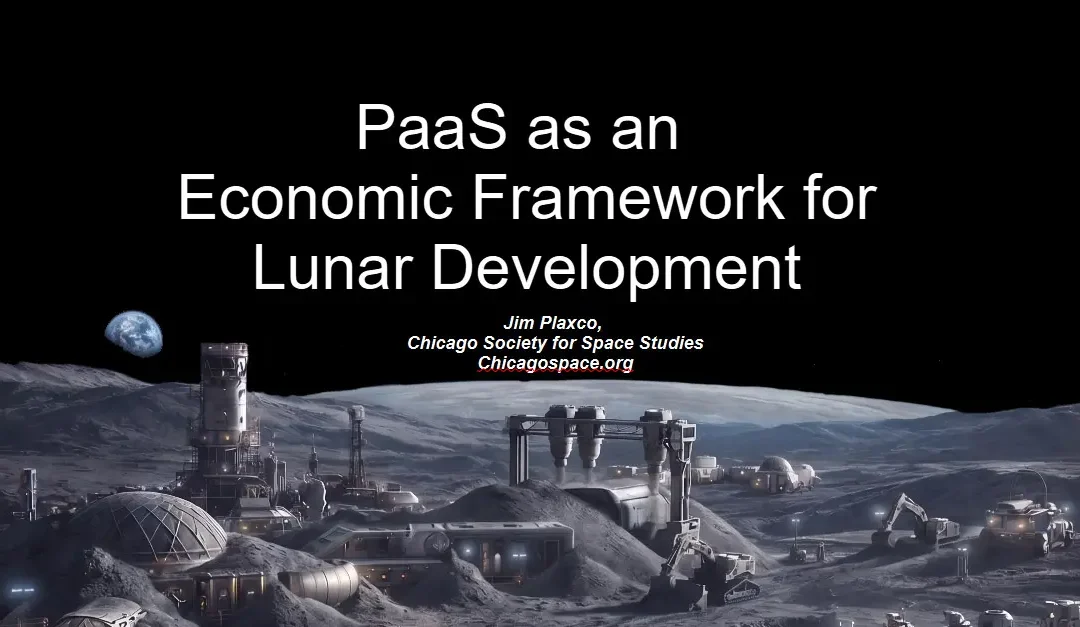
Typically when space development advocates speak of a future cislunar economy they envision a network of lunar facilities and settlements, orbital space colonies either in Low Earth Orbit or at the L5 LaGrange point, solar power satellites delivering energy to Earth, space-based factories employing zero gee manufacturing processes, and a network of transportation hubs. This vision may best be characterized as describing a complete economic ecosystem of private enterprises and institutional organizations operating throughout cislunar space with people living and working across that same system, with that system creating new value for humanity.
But how do we reach this destination? To transition from where we are today to where we hope to be in the future will be a challenging task. It is difficult to imagine traditional development models as being applicable to the initiation and development of a sustainable commercial business sector on the Moon. Let me be clear, by sustainable I mean profitable. The value of the goods and services produced on the Moon must be greater than the value of the goods and services consumed in support of that production. Whenever anyone talks about the sustainability of a lunar economy, the emphasis must be on the creation of a system that produces more than it consumes.
This essay will explore those challenges and propose a solution that employs an As-A-Service framework that addresses the primary challenge of establishing a lunar infrastructure so that individual ventures do not have to be completely vertically integrated while simultaneously reducing the amount of capital expenditures required to establish operations, lowering the level of business risk, and minimizing the time to market.
Site Selection for the Moon: Magnificent Desolation
The Moon was aptly described by Apollo 11 astronaut Buzz Aldrin as magnificent desolation. I place emphasis on desolation: no air, no life, no water – nothing but regolith and craters. While the Moon is quite the exotic location, it is a harsh and unforgiving place in which to do business.
If we look at the Moon through the lens of a business undertaking a site selection study, there is nothing today that recommends the Moon as being a place to establish a business, other than its exotic location. Consider the following list of site selection criteria. How well do you think a site on the Moon would do in comparison with a site anywhere on Earth for each of these criteria?
A Site Selection Criteria List
-
Physical proximity to markets
-
Transportation network linkages
-
Infrastructure and utilities reliability and cost
-
Nature of the labor market (size & variety)
-
Competitive labor costs
-
Availability of financial incentives
-
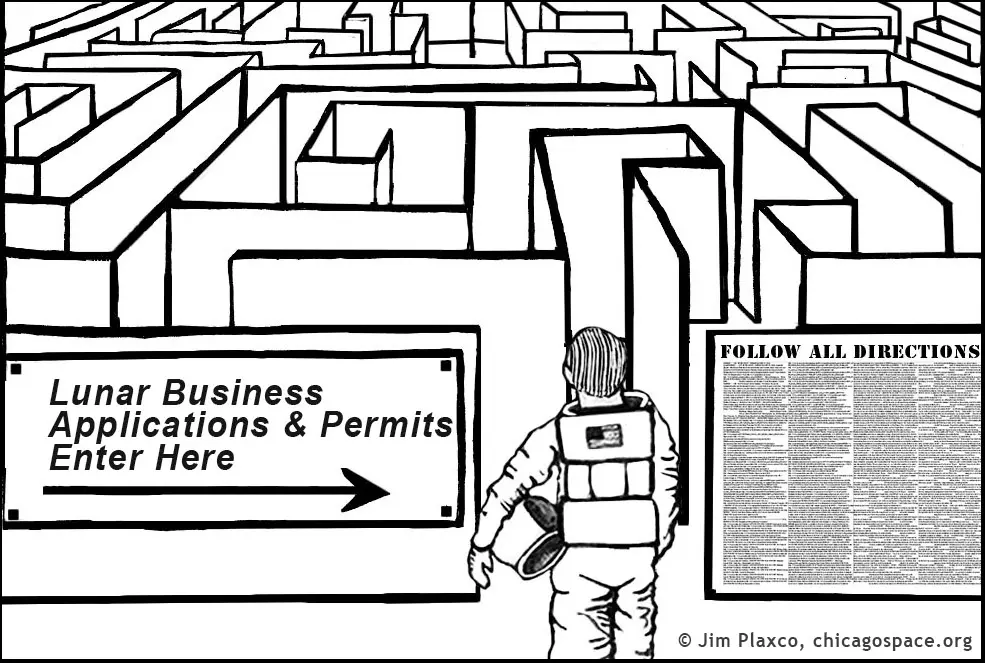
Nature of the regulatory and permitting regime
-
Environmental challenges and restrictions
-
Potential for expansion
-
Tax incentives
-
Secure property rights and contract law
No easy access to markets, no infrastructure, no legal clarity, and a totally hostile environment. We can conclude from a review of this list of site selection criteria that the Moon is no place at which to set up a business for traditional economic purposes.
Environmental, Technological, and Commercial Challenges
In addition to the Moon’s failure to meet a standard set of site selection criteria, the Moon also presents us with a unique array of significant challenges. These challenges can be seen as falling into three problem domains: the environmental domain, the technological domain, and the commercial or business domain.
Environmental Challenges Domain
One set of challenges are those associated with the lunar environment. We can’t do anything about the 1/6th gravity, which has both pluses and minuses. Nor can we do anything about the lunar vacuum. But there are steps that we can and must take to deal with the radiation environment, the nature of the lunar dust, and the thermal extremes that are exacerbated by the two week long lunar night.
Technology Challenges Domain
With respect to the technological challenges, we should place our central emphasis on those technologies associated with ISRU: the mining, refining, and processing of local resources. Without the ability to make use of the Moon’s resources, the Moon will most likely never generate a positive return for humanity.
Business Challenges Domain
As if the environment and immature technology challenges weren’t enough, the Moon presents us with a number of unique business challenges. High transportation costs, forced vertical integration due to a lack of infrastructure, an ambiguous legal framework, unproven and unknown markets, a lack of interoperability standards, insurance and associated financial risks all combine to significantly raise the levels of risk and the cost of doing business.
The Top Ten Challenges to the Economice Development of the Moon
For a detailed treatment of the environmental, technology, and business challenges discussed here, refer to the article The Top Ten Challenges to the Economic Development of the Moon.
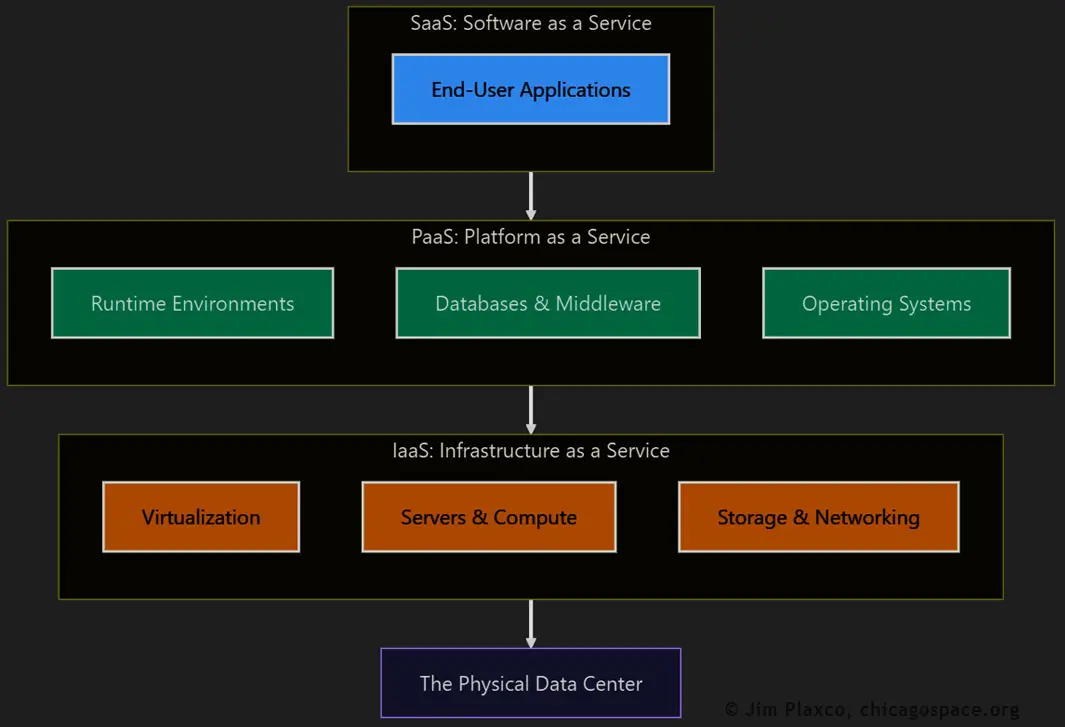
The rise of cloud computing, which has been facilitated by large scale improvements in networking and connectivity, has brought about the rise of the As-A-Service business model. This model can be characterized as an outsourcing of business functions that are critical to the business’ ability to produce its goods and/or services but are not the good or service itself.
The As-A-Service Model is a classic example of an exchange of value between parties. The value to the provider of the service is the ability to receive a fairly predictable revenue stream since these are basically subscription and/or metered usage services. And because the provider is selling the same set of services to a large customer base, they are able to build expertise and benefit from economies of scale – which makes it possible for the provider to deliver these services at a price that is lower than what the customer’s own costs would be if they attempted to provide these services in-house.
For the customer, access to these specialized services has many benefits. It lowers their capital expenditures (CapEx), lowers their ongoing operating costs, and minimizes the time to market for their product. Most importantly, the business is able to reduce its risk profile. In short it allows the business to devote more attention and capital to their actual product while leveraging the facilities and expertise of their As-A-Service provider. Lastly, by renting rather than owning these services, the companies can more rapidly scale capacity up or down as demand or circumstance dictates.
The economic logic of the As-A-Service business model can be summarized as the separation of infrastructure ownership from infrastructure consumption. In the context of current missions to the Moon, missions must provide for all of the infrastructure that they require which greatly increases mission cost.
A Lunar PaaS (Platform-as-a-Service) Business Model
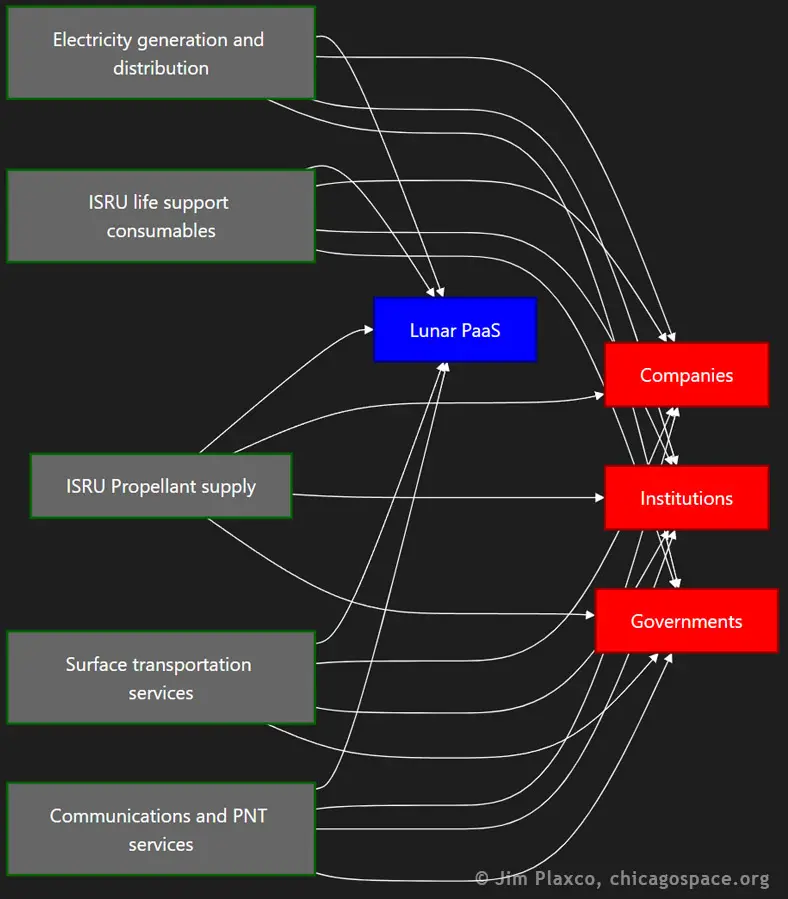
Consider the application of the As-a-Service business model to the economic development of the Moon. In the proposed scenario, one or more governments jointly enter into contractual relationships with a variety of commercial enterprises via a Moon PaaS contract. Each enterprise would provide one or more infrastructure class services according to the terms of the contracts. The benefits of a government-based Moon PaaS agreement to the contracted service provider would be:
-
A predetermined minimum level of demand
-
A defined services subscription period
-
A defined revenue stream
Having foreknowledge of the minimum demand levels, revenue levels, and timeframe significantly lowers financial risk while offering the possibility of selling the excess services to other entities, be they commercial, institutional, or governmental.
The benefits to the Moon PaaS signatory as a customer, in this case the governmental entity that is the source of the contracts, would be to
-
eliminate the need for full vertical integration for missions and projects
-
minimize capital expenses by offloading infrastructure development costs
-
minimize the time to market for future projects
-
minimize the technical risk associated with subsequent projects
-
leverage the specializations and experience developed by the service providers
-
gain a first mover advantage
An analogous implementation of this concept is NASA’s Commercial Lunar Payload Services (CLPS) program which uses commercially built and operated landers to send payloads to the Moon.
It should be acknowledged that the Moon PaaS framework could later be expanded to include construction, thermal management, data processing, storage facilities, maintenance services, robotics leasing, waste management services, and habitat services. The concept in some respects resembles the development logic of an industrial park. A lunar industrial park would be a likely consequence of a Moon PaaS system of agreements and would result in a stronger economic development function than would a collection of individual, vertically integrated facilities.
More on Benefits of a Moon PaaS Development Model
There are a range of benefits and beneficiaries in the adoption of a Moon PaaS approach. The primary benefit is the minimization of the vertical integration requirements for all operators, not just the Moon PaaS entity but for the infrastructure providers and third party participants as well. This approach also minimizes redundancy. Being able to purchase energy, transportation, propellant, ISRU consumables, transportation services, and communications and PNT services from specialized producers will be of significant benefit to all entities looking to establish a presence on the Moon. Further, the creation of this collection of infrastructure services will encourage the development of a variety of ancillary services that most likely otherwise would not occur due to both cost and market size.
The establishment of a system of infrastructure service providers will also produce an increase in the number of participants in lunar activities which will accelerate the development of economies of scale while increasing operational confidence by reducing total risk.
In short, Moon Paas achieves the following positive results:
-
Creates a large family of stakeholders
-
Eliminates major vertical integration requirements for:
-
Energy
-
Transportation
-
ISRU Consumables
-
Communications & PNT
-
-
Facilitates development of ancillary services
-
Improves the potential to achieve Economies of Scale
-
Increases operational confidence by reducing risk
The suppliers of services, shown in Figure 2 as the gray nodes, benefit by having a guaranteed minimum demand via their contracts with the Moon PaaS entity, which is the blue node in FIgure 2. This in turn benefits other organizations, shown as the red nodes in Figure 2, seeking to carry out operations on the Moon. This boost to achieving a critical mass of supply and demand will produce a virtuous cycle that reduces the system’s unit costs while increasing the range of options for late adopters.
Third parties who decide to contract infrastructure services from the Moon PaaS providers can benefit in the following ways:
-
Frees them from designing, building, and maintaining their own infrastructure
-
Lowers their opportunity costs by offloading infrastructure
-
Lowers their total fixed costs by substituting flexible, demand-based operating costs
-
Offers adaptable demand-based scaling for services
-
Provides and enforces a standardized operating environment
-
Shortens their product time-to-market (TTM)
-
Lowers total capital expenditures
-
Lowers operational risk
-
Increases the probability of achieving product economies of scale
A Moon PaaS Contractual Framework
One area of concern in creating a Moon PaaS framework is the extent of the contracted services and associated governance. To maximize the benefits, contracts should be issued to as large an array of infrastructure service providers as possible. Power, locally produced consumables, propellant, transportation services, and communications should be viewed as the minimum number of services provided by such contracts.
Another component that would promote development is if the contracts issued require the supplier to have a productive capacity that exceeds by some percent the quantity of services to be provided via the Moon PaaS contracts. This will be an encouragement to the suppliers to seek out additional customers to purchase their production that is in excess of that consumed via the Moon PaaS agreement. To further this goal, the Moon PaaS contracts should not impose any restrictions on contracts the suppliers may enter into with other entities.
To summarize the nature of the Moon PaaS contracts, the government entity creating the Moon PaaS contracts should:
-
Issue multiple contracts with multiple commercial providers to supply:
-
Power Generation, Management, Distribution
-
Environmental Consumables (ISRU) Production & Distribution
-
Propellant Production (ISRU) & Storage Services
-
Transportation Infrastructure & Services
-
Communications & PNT Services
-
-
Allow the Service Providers to determine the optimal production methodology
-
Issue contracts that provide for a minimum guaranteed purchase volume per annum for a specified multi-year period at a specified price
-
Stipulate an excess production capacity
-
Not restrict Service Providers from contracting out excess capacity to other customers
Moon PaaS Contract Requirements Should Be Minimal
Every effort should be made to make sure that the Moon PaaS contracts are structured so as to emphasize the exchange of goods or services aspect of the agreement. It should be left to the service provider to determine how best to meet their contractual obligations. This principle is particularly important because the technologies that will be employed are immature. A Moon PaaS contract that specifies the technology to be used can lock the service provider into using an inferior architecture. A capability-based contract approach makes it possible for competing technologies to demonstrate their economic and technical advantages over time.
Because the Moon is an entirely new business frontier and we don’t rightly know what will work, the individual service providers need to have the latitude to experiment and discover through experience what works best for operating on the Moon. In recognition of this fact, the Moon PaaS model should emphasize delivery of outputs rather than also prescribing the production methods and anything that is not germane to the delivery of the contracted services.
Alignment with World Bank Doing Business Indicators
In drafting the Moon PaaS contracts, the structure and scope of the contracts should respect the good business indicators developed by the World Bank for its annual Doing Business report. Production of the report was discontinued due to data manipulation that favored China and political pressure regarding the report’s metrics – which was seen as hurting poor countries.
Quoting from the Doing Business Report of 2017, “A growing body of literature shows that government action to create a sound, predictable regulatory environment is central to whether or not economies perform well and whether that performance is sustainable in the long run.”
The Measurement Categories Used by the 2020 Doing Business Report are:
-
Starting a Business
-
Dealing with Permits
-
Getting Electricity
-
Registering Property
-
Getting Credit
-
Protecting Minority Investors
-
Paying Taxes
-
Trading Across Borders
-
Enforcing Contracts
-
Resolving Insolvency
Whether here on Earth or operating on the Moon, like the laws of physics, the laws of economics do not change. The World Bank’s good business concepts translate naturally into economic-development questions that can be applied to the Moon PaaS model. The nature of a future lunar business environment for the Moon PaaS service providers could be evaluated by addressing questions like:
-
How easily can a new business obtain a lunar service contract?
-
How easily can it contract for transportation services from other Moon PaaS providers?
-
How quickly and easily can it obtain power from a Moon PaaS provider?
-
How quickly and easily can it obtain communications and PNT services?
-
Can the business transfer their Moon PaaS contract to another provider?
-
What restrictions are placed on the Moon PaaS provider with respect to imports, exports, and the selling of their services to other parties?
The goal of the Moon PaaS contracts should be to minimize transaction costs and avoid creating an unnecessarily heavy regulatory structure.
A Challenge of Economic Development, Diversification, and Sustainability
So far this essay has focused on the benefits of using a Moon PaaS system to establish a commercially viable infrastructure network on the Moon. But there is a problem with the system described thus far. While Moon PaaS is an excellent way to build the needed infrastructure and lower both costs and risks for these commercial operations, the next question that must be asked is what will be produced for sale to markets outside the Moon? What products or services will these enterprises produce and sell to offset their purchases of lunar utilities, local goods, and imports from Earth?
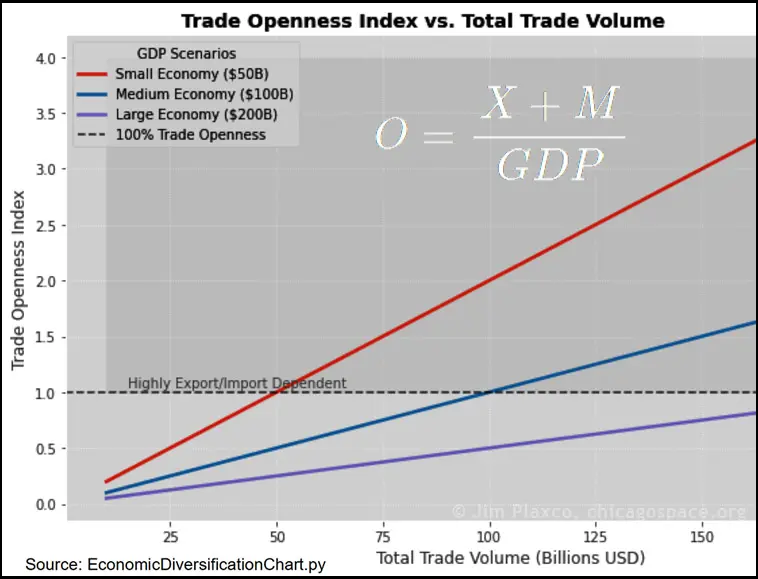
Figure 3 above is a chart of trade openness and can be used as an illustration of the trade challenges lunar businesses will face. The Trade Openness Index is a measure of how open or closed a system is to trade based on the value of both imports and exports as a fraction of GDP. A value of 1 (the dotted horizontal line labelled “Highly Export/Import Dependent” represents a situation where the dollar value of exports and imports are equal to the system’s GDP. However, the index ignores the economic issues associated with trade deficits – that being when a system imports more than it exports.
I predict that for some years to come, the Moon as an economic system will have a Trade Openness Index that is above the value of 1 – specifically that the value of its imports will be greater than its entire GDP. This aspect of lunar development must be taken into consideration when establishing the duration and renewal conditions for the Moon PaaS contracts.
Economic & Market Predictions Gang Aft Agley
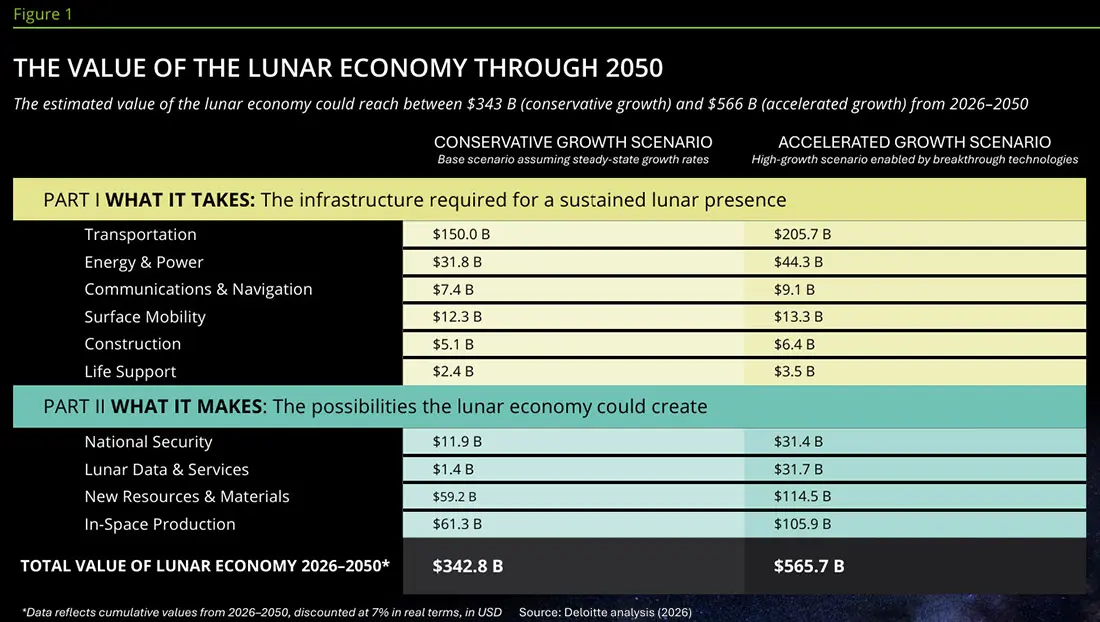
In August 2026, Deloitte released a “Value of the Lunar Economy” report in which they analyze the future of the lunar economy. The report focused on the size of the Moon’s economy in 2050. Deloitte gave a conservative estimate of a $342 billion GDP and an accelerated growth estimate of a $566 billion GDP (see Figure 4). One point of concern about the Deloitte report’s GDP numbers is that almost two thirds of GDP is the value of goods and services associated with keeping the Moon running and one third can be considered as the value of exports. The report has nothing to say about the dollar value of imports and capital inflows that make these levels of economic production possible.
It is also difficult to put much stock in these numbers given the very speculative nature of the subject being measured. For comparison, a respected 2002 space tourism market study estimated that by 2020 there would be 16,000 people a year taking suborbital flights. There was also the hype surrounding the arrival of the companies Planetary Resources and Deep Space Industries which led to a headline from 2017 claiming that asteroid mining could be a mult-trillion dollar industry by 2020. I double checked the date of the article to make sure that it wasn’t an April Fools prank.
In discussing models of a predictive (and speculative) nature, I frequently cite the case of the Drake Equation where the answer to the question of “how many intelligent civilizations are there currently in the Milky Way galaxy?” depends entirely on the biases of the person assigning values to the equation’s parameters.
The Nature of Trade
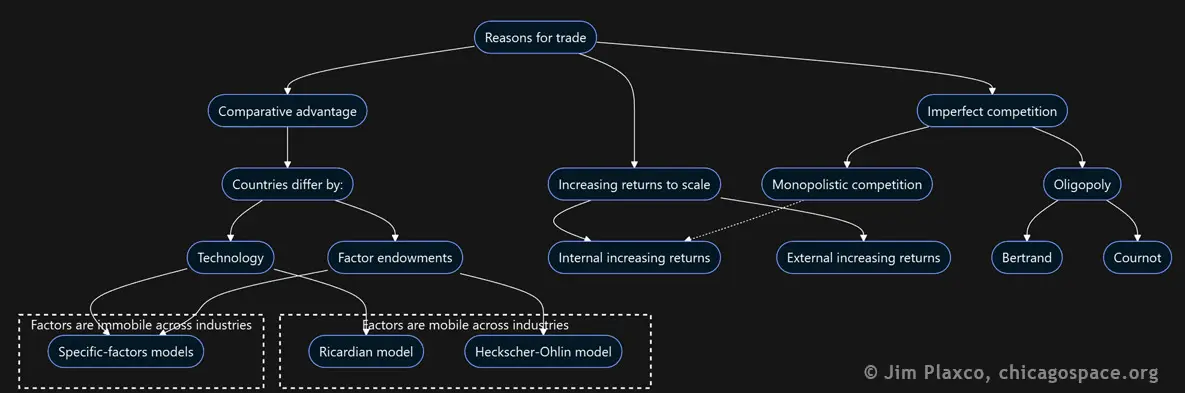
Over the years a number of trade models have been developed to explain the nature of trade. Given the factors upon which these models are built, it will be difficult to envision a near future scenario in which the Moon produces anything that is so valuable as to offset the costs of production and to be competitive with Earth’s industries.
The Specific Factors Trade Model measures a nation’s comparative advantage based on endowments or resources that are relatively immobile across industries. The Ricardian Trade Model measures comparative advantage based on differences in productivity and technology differences. The Heckscher-Ohlin Trade Model measures comparative advantage based on factor endowments.
The various trade models give rise to the question “What factors does the Moon possess that Earth does not possess? The Moon is distinguished from the Earth by its 1/6th gravity, its vacuum, and its unique geological materials but what is their value? A natural resource is not automatically an economic resource. That natural resource only becomes economically valuable when it can be extracted, processed, and delivered to a customer at a price the customer is willing to pay and at a volume that allows the firm to recover its capital expenditures, etc. Until that first lunar-based business begins selling goods and services into Earth’s markets, the question of whether or not the Moon has any comparative advantage remains an entirely hypothetical question.
The Costs of Goods Sold: The Moon Versus The Earth
In order for the Moon to produce exportable goods for the Earth market, its goods must be either totally unique or can be produced on the Moon and delivered into Earth’s markets at a cost that is lower than what it would cost to produce them here on Earth. A lunar product being sold in an Earth market must overcome the enormous cost of having been produced on the Moon and the cost of transportation.
For example, assume that there are barrels of oil sitting on the Moon waiting to be picked up. What would the price of gasoline have to be in order to simply cover your round trip transportation costs? At the high end, gasoline would need to be selling for more than $ 6,940,034 a gallon! If we assume a very optimistic transportation price, if every optimistic projection about SpaceX Starship costs come true, then the price of gasoline would only need to be $154,000 a gallon (assuming round trip costs of $22,046/kg). Product uniqueness will relax the requirement that the product be price competitive, but only if customers are willing to pay for that uniqueness.
To the best of my knowledge there is only one natural resource on the Moon for which there may be an Earth market and that’s Helium-3 whose current market price is between 15 and 20 million dollars per kilogram. The global supply of Helium-3 is currently on the order of tens of kilograms and demand will likely grow as Helium-3 is used for quantum computing, cryogenics, neutron detection, and advanced medical imaging. Note that I am dismissing the value of Helium-3 as a fuel for nuclear fusion reactors because they do not yet exist. So the question is whether or not Helium-3 can be mined on the Moon for a cost that is substantially less than 15 million dollars per kilogram – and it remains to be seen how much downward pressure on price there will be as supply increases and whether or not lunar production and transport costs can move down as price moves down with the increasing supply.
The MIRAB Model for Island Economies
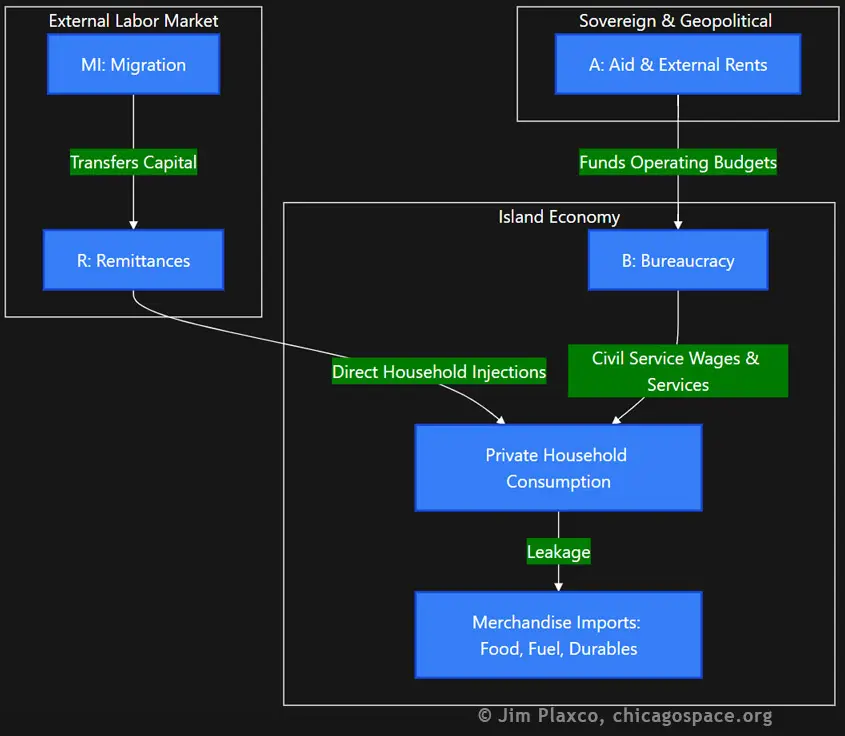
Consider the Moon as an example of an island economy. The MIRAB model shown in Figure 6 was created as a tool for understanding the economic dynamics of small island economies, originally developed with the islands of the Pacific Ocean in mind. With a mental image of the economic development of the Moon, consider the following list of key economic challenges faced by small island nations:
-
Inability to Achieve Economies of Scale
-
High Per-Unit Production Costs
-
High Levels of Consumption Imports
-
Limited Import Substitution
-
Narrow Production and Export Bases
-
Lack of Economic Diversification
-
Geographic Remoteness
-
High Logistics Frictions
-
Environmental Fragility
-
Chronic Trade Deficits
-
Dominant Public Sector
-
Dependence on External Transfers (MIRAB Dynamics)
-
Domestic Market Imperfections (Oligopoly and Monopoly)
-
Human Capital Depletion
I think we can agree that attempting to establish an economy on the Moon faces to varying degrees all of these challenges – which are in addition to the unique environmental, technological, and business challenges described earlier. A key question with respect to the aforementioned challenges is whether a lunar economy would be trapped in some sort of static equilibrium in which government expenditures via the Moon PaaS agreements must continually support a lunar economy that fails to generate sufficient export revenues to stand on its own.
The Role of Capital vs Labor on the Moon
For those small island economies, remittances from emigrants is an important source of income but the Moon has no native workforce to use or export. One area of hope for a lunar economy is if human involvement in the production process is minimized or totally eliminated because humans are the cost tentpole of space exploration. Table 1, “A Categorization of Robots Versus Human in terms of Cost and Productivity”, offers a table of comparisons of robots and automation versus human labor.
Table 1. A Categorization of Robots Versus Human in terms of Cost and Productivity
|
Class |
Category |
Robots/Automation |
Human Labor |
|
Availability |
Max Work Hours per Year |
8760 |
2000 |
|
Availability |
Mean Time Between Failure |
High & Predictable |
Unpredictable |
|
Productivity |
Quantity of Output Predictability |
High |
Medium |
|
Labor |
Workplace Safety Costs |
Low |
High |
|
Labor |
Injury Liability |
None |
High |
|
Labor |
Cost per Hour |
Fixed/Declining |
Variable, Rising |
|
Labor |
Management Required |
Minimal |
Variable |
|
Labor |
Training Time/Costs |
N/A |
Variable |
|
Labor |
Human Resources (HR) |
No |
Yes |
|
Environment |
Environmental Support Systems |
None |
High |
|
Environment |
Environmental Support Mass |
None |
High |
|
Environment |
Living Space Requirements |
0 |
1,740 m³/person |
|
Environment |
Radiation Shielding Requirements |
0 |
450 g/cm² |
The elements of Table 1 make a strong case that automation should be thought of as more than just a technological preference – it should be seen as an economic necessity.
Challenges for a Moon PaaS Solution
There are additional challenges that a Moon PaaS approach will have to solve. Examples are how will site selection be made and will there be one site or multiple sites? Another question concerns the geographic extent of the services provided and how close the consumers of those services must be to producers and how these geographical limitations impact growth. For example, a centralized lunar electric utility could achieve economies of scale but could result in transportation bottlenecks and geographic dependencies whereas a more distributed network could improve resilience but at the price of duplicated infrastructure.
The optimal infrastructure configuration may therefore be a hierarchy that consists of local microgrids, dispersed ISRU facilities, regional infrastructure clusters, and inter-site surface transportation networks. In this instance the Moon PaaS system would function as a network of sites rather than as a single central site.
To summarize some of the challenges the designers of a Moon PaaS framework will face:
-
Lunar site selection(s) process
-
Geographic extent of the distribution of services
-
Ability of contracted infrastructure suppliers to meet demand growth and spikes
-
Defining service utilization rates relative to contracted purchases
-
Timing of and conditions for guaranteed purchases phase-out when contracts are negotiated
-
Identifying disposition of demand within the Moon PaaS contractual framework
The ‘Great Divergence’ Applied to Lunar Development
In spite of the challenges previously presented, there is a question of whether or not undertaking space development in a significant way can lead to a second Great Divergence. The term Great Divergence originated with University of Chicago history professor Kenneth Pomeranz and was used to describe the rapid advance in wealth and standard of living for those nations that chose to industrialize versus those that didn’t, which basically created a quasi-permanent strategic and economic advantage for the early-adopters of industrialization.
If efforts to establish a lunar economy are successful and grow to the extent that the Moon’s GDP becomes economically consequential, then those countries and enterprises that establish those productive capabilities could gain a long-term cumulative advantage over those countries that chose not to invest in space development. Think of this as a form of path dependence where the initial generation of infrastructure providers become foundational to all those who follow. That is why the Moon PaaS concept may have strategic importance even before the lunar economy becomes independently profitable. Establishing Moon PaaS could serve as a foundational component in the development of a cislunar economy and potentially provide the platform upon which a broader cislunar economic system succeeds.
Revisiting Moon PaaS Benefits for Lunar Development
To revisit the benefits of a Moon PaaS system which employs an anchor customer, that customer being either a single government or as a multinational arrangement, to commercially procure a range of infrastructure services that are then available for use by other parties, we can achieve better economies of scale, lower individual capital expenditures, increased productive output by minimizing the time to first product, lower risk for individual businesses, and lower the barriers to entry so that more nations, institutions, and enterprises can participate via what would be a virtuous cycle.
The following list summarizes six of the benefits that a Moon PaaS development approach can deliver.
-
Core suppliers ability to leverage economies of scale
Infrastructure providers are able to aggregate demand that would otherwise be fragmented among individual missions and projects. -
Availability of basic infrastructure lowers enterprise capital expenditure
Downstream companies, institutions, and governments purchase services rather than duplicating the entire infrastructure system. -
Infrastructure outsourcing permits rapid iterative design
Companies can concentrate on their unique value proposition rather than diverting resources to develop utilities, transportation, communications, and other infrastructure systems. -
Established infrastructure lowers business risk
Specialized infrastructure services already in operation yield reliability data, maintenance experience, and predictable services. -
Moon PaaS becomes a first mover that builds confidence
Government-backed infrastructure systems will reduce uncertainty and attract additional entities and investment. -
A portfolio of services lowers barriers to market entry
More firms, research organizations, countries, and institutions will be able to participate due to lower risk and capital expenditure requirements.
Not listed, but certainly a potentially powerful force, are the probability of network effects – the more entities that become engaged in lunar operations, the more others will want to follow, thus creating a powerful positive feedback loop.
Moon PaaS Conclusion
To ensure long-term economic vitality, contracts between governments and Moon-PaaS vendors must remain strictly limited to the commercial procurement of goods and services. Vendors and regulatory bodies must not impose non-functional constraints on customers, ensuring open, value-driven market access. As positive network effects take hold, the Moon PaaS will accelerate cislunar expansion, converting early investments into an enduring, self-sustaining economic system. Stakeholders must embrace this operational framework and not pursue a quest for a “perfect” theoretical system that becomes a roadblock to lunar development.
The establishment of a Platform-as-a-Service framework, herein referred to as Moon PaaS, can be viewed as a pragmatic, economically sound foundation for initiating and accelerating the economic development of the Moon. By serving as a long-term, reliable anchor customer, Moon PaaS substantially de-risks the capital investments of the infrastructure service providers while providing a market demand floor. Simultaneously Moon PaaS minimizes its own capital expenditures and avoids the creation of state-owned monopolies.
To ensure organizational, operational, and market flexibility, the Moon PaaS contracts should be restricted to defining the provision of goods and services only. The Moon PaaS contracts should not impose any regulatory constraints on the service providers beyond those absolutely necessary for the provision of the contracted goods and services.
Providing the infrastructure service providers with the freedom to market and sell their excess capacity to other parties will encourage the creation of network effects which will accelerate economic expansion, thus creating a more resilient system.
Further Reading
-
‘As a service’ business models: What it is and its benefits, Consultancy.eu, https://www.consultancy.eu/news/7350/as-a-service-business-models-what-it-is-and-its-benefits
-
Building the Lunar Economy, Deloitte, https://www.deloitte.com/content/dam/assets-zone3/us/en/docs/services/consulting/2026/deloitte-building-the-lunar-economy-report.pdf
-
Doing Business 2017: Equal Opportunity for All, World Bank Group, https://archive.doingbusiness.org/content/dam/doingBusiness/media/Annual-Reports/English/DB17-Report.pdf
-
Doing Business 2020: Comparing Business Regulation in 190 Economies, World Bank Group, https://documents1.worldbank.org/curated/en/688761571934946384/pdf/Doing-Business-2020-Comparing-Business-Regulation-in-190-Economies.pdf
-
Everything-as-a-Service (XaaS): Beyond the device, Deloitte, https://www.deloitte.com/us/en/what-we-do/capabilities/mergers-acquisitions/services/xaas-everything-as-a-service-model.html
-
Exploring the adoption of as-a-Service business models: Opportunities, Challenges and Enablers, Science Direct, https://www.sciencedirect.com/science/article/pii/S187705092600400X
-
Great Divergence Search, Cambridge Economic History. https://www.cambridge.org/core/search?filters[keywords]=Great%20Divergence
-
Introduction: The MIRAB model in the twenty-first century, Asia Pacific Viewpoint, Volume47 Issue1, April 2006, https://doi.org/10.1111/j.1467-8373.2006.00296.x
-
NASA Commercial Lunar Payload Services, NASA, https://www.nasa.gov/reference/commercial-lunar-payload-services/
-
Site Selection Analysis: How to Choose the Best Location, Accruent, https://www.accruent.com/resources/knowledge-hub/site-selection-analysis
-
Supply and Demand of Helium-3 (He-3), National Isotope Development Center, https://www.isotopes.gov/Supply-and-Demand-of-Helium-3
-
The British Industrial Revolution in Global Perspective by Robert C. Allen, Cambridge University Press, 2009
-
The MIRAB Model of Small Island Economies in the Pacific and their Security Issues: A Draft, https://ageconsearch.umn.edu/record/163698/?ln=en&v=pdf
-
The Mirab Model Twelve Years On by Geoffrey Bertram, Social Science Research Council, https://www.ssrc.org/publications/the-mirab-model-twelve-years-on/
-
The Rise and Fall of State-Owned Enterprise in the Western World by Pierangelo Maria Toninelli, Cambridge University Press, 2000
-
The rise of the Western world : a new economic history by Douglass C. North and Robert Paul Thomas, Cambridge University Press, 1973
-
The Site Selection Corporate Checklist, Newmark, https://www.nmrk.com/perspectives/the-site-selection-corporate-checklist
-
The Wealth and Poverty of Nations: Why Some Are So Rich and Some So Poor by David S. Landes, W. W. Norton & Company, 1998
-
Trade, Technology Diffusion and Growth, The New Palgrave Dictionary of Economics,3rd ed., Palgrave Macmillan, 2018
-
Using Space-Based Resources for Deep Space Exploration, NASA, https://www.nasa.gov/overview-in-situ-resource-utilization/
Author Biography: Jim Plaxco is President of Chicago Society for Space Studies, a member of the CSSS Speakers Bureau, and a National Space Society Space Ambassador. Jim was elected to the NSS Board of Directors for the third time in 2024 and has previously held the positions of NSS Vice President for Chapters, NSS Director of Information Systems, Vice President of Planetary Studies Foundation, and President of Northern Illinois Space Advocacy.