
Table of Contents
Introduction
1-Key Objectives
- Scheduling the Master Plan
2-Phases of the Space Development Master Plan
- Scenario
3-Phase 1: Pioneering space (Pre-1957 to Present)
4-Phase 2: Advancing Human Presence in Space
- The cruiser feeder space transportation system
- Asteroid Retriever Vehicle
- Expected Innovators
- The Multibody Spaceplane
- Expected Outcomes
- Expected Innovators
- Second-Generation Space Station
- Expected Outcomes
- Expected Innovators
- Mission to Mars
- The Essential Mars mission
5-Phase 3: Consolidation of space activities
- First generation settlement
- The Settlement
- Pod Configuration and Dimensions
- Terraforming Mars – Motivations and Goals
6-Phase 4: Solar System Colonization
- Second Generation Space Settlements
- Underground Terraforming: A Practical Path to Space Habitation
7-Phase 5: Interstellar Travel
- Motivations and Goals for Interstellar Space Development
Conclusion
Bibliography
Biography for Giorgio Gaviraghi
Introduction
Following the Apollo missions, the Space Shuttle program, the International Space Station (ISS), interplanetary probes, and other pivotal achievements, humanity is now transitioning from the pioneering era of space exploration into a new operational phase. With the impending return of humans to the Moon and the prospect of crewed missions to Mars, the focus of space development is shifting — now driven by economic potential alongside scientific discovery and exploration. In this emerging era, space is poised to become a major economic frontier. The utilization of extraterrestrial resources holds the potential to revitalize the global economy. By tapping into the vast wealth of space, humanity can stimulate innovation, create entirely new industries, generate employment, and increase global prosperity. Crucially, space development also presents an opportunity to address some of Earth’s most pressing challenges — laying the foundation for a “quadrillion-dollar” economy that could significantly contribute to eliminating global poverty. To ensure coherent and effective progress — especially amid the growing involvement of national space agencies, private enterprises, and international stakeholders — a comprehensive Space Development Master Plan is essential. This plan should:
- Define strategic and technological objectives
- Establish phased sequences of action
- Identify the infrastructure and capabilities needed
- Serve as a political framework for international cooperation
- Align goals across nations and private actors
- Promote peaceful and collaborative development of space
The foundation of any successful Master Plan lies in the establishment of clear, long-term goals. These goals shape the development of enabling technologies, guide the prioritization of missions, and determine the sequence of activities. While each organization may prioritize differently, a unified global roadmap can help synchronize efforts and accelerate collective progress.
1-Key Objectives
We can summarize main goals as follows:
- Affordable Access to Space
- Earth-Orbital Operational Infrastructure
- Reusable Space-Based Transportation Systems (for the Moon, Mars, and Near-Earth Objects)
- Lunar and Martian Settlements
- Mars Terraforming Roadmap
- Surface Infrastructure on Other Celestial Bodies (including underground habitats and terraform-ready systems)
- Space-Based Launch Facilities (orbital and deep-space)
- Asteroid Capture, Deflection, and Mining Systems
- Advanced Space Settlement Technologies
- Interstellar Travel Capability (through next-generation propulsion systems)
- Creation of a Quadrillion-Dollar Space Economy
An accelerated development strategy is recommended to reach interstellar capabilities sooner than traditional timelines would allow. While the foundational technologies may be similar across most space development plans, priorities, sequences, milestones, schedules, and budgets must be optimized to compress the timeline.
Scheduling the Master Plan
Scheduling such an ambitious, long-term effort requires careful consideration of historical lessons, emerging technologies, and unpredictable contributions from the private sector. The Master Plan must act as both a funding framework for public agencies and a coordination guide for commercial ventures.
Drawing from both past achievements and anticipated advancements, the timeline can be divided into five distinct phases, with Phases 2 through 4 representing the core focus of this roadmap.
2-Phases of the Space Development Master Plan
- Phase 1: The Pioneering Era (1957 – Present)
The foundation — satellite launches, Moon landings, space stations, and robotic exploration. - Phase 2: Human Return to the Moon and First Mars Bases
Establishing permanent infrastructure on the Moon; initiating human missions and basic habitats on Mars. - Phase 3: Consolidation and Expansion
Building cities on Mars, beginning the terraforming process, and constructing permanent space settlements. - Phase 4: Operational Solar System Colonization
Full-scale colonization of the solar system, the rise of a major space-based economy, underground terraforming of celestial bodies, and interplanetary industrialization. - Phase 5: Interstellar Travel
Humanity’s greatest leap — developing the technologies and infrastructure to begin reaching the stars.
Scenario
To enable long-term space colonization and interstellar missions, progress in other domains must accelerate as well. This includes:
- Eliminating disease as a primary cause of death
- Breakthroughs in rejuvenation and anti-aging technologies
- Life extension and enhanced healthspan
- Artificial wombs and advanced reproductive technologies
- Integration of brain-computer interfaces
- Human cloning and synthetic biology
- Singularities (technological economic, education, social)
These advancements will extend human capabilities, making deep-space life more sustainable and adaptive. Space colonization must be supported by a parallel evolution in human biology and societal structures.
The Space Development Master Plan is not merely a technical blueprint —it is a vision for humanity’s future among the stars. By aligning our goals, accelerating development timelines, and fostering global collaboration, we can unlock the full potential of the solar system and beyond.
Let’s analyze the single phases.

Figure 1: Plan for the future of space development
3-Phase 1: Pioneering space (Pre-1957 to Present)
Phase 1 marks the transition from early space ambitions to a foundation of modern space infrastructure. Starting with Sputnik 1 in 1957, key milestones include Yuri Gagarin’s first human spaceflight in 1961 and the historic Apollo 11 Moon landing in 1969. These events sparked rapid technological and scientific progress, leading to reusable vehicles like the Space Shuttle, planetary probes, and space stations including Mir, the ISS, and Tiangong.
Space exploration has significantly benefited sectors far beyond aerospace. The industry itself now supports over 500,000 jobs and underpins a multi-billion-dollar global economy. Satellite communications revolutionized global connectivity, while GPS redefined navigation, enabling technologies like autonomous vehicles. Space-based research transformed disciplines such as meteorology and astronomy, and medical innovations developed for space continue to enhance healthcare on Earth.
Technologies initially developed for space — such as miniaturized electronics and computing systems — catalyzed the digital revolution, leading to personal computers, smartphones, and the internet.
Today, we are witnessing the rise of a new space economy.
Advances in reusable launch systems by companies like SpaceX and Blue Origin are driving down costs, enabling commercial ventures and space tourism. Government-led missions (e.g. Artemis, Tiangong) and growing private-sector participation reflect a shift toward economic utilization of space.
This phase has laid the groundwork for the future — transforming space from a scientific frontier into a dynamic, expanding sector of the global economy.

Figure 2: Phase 1 milestones
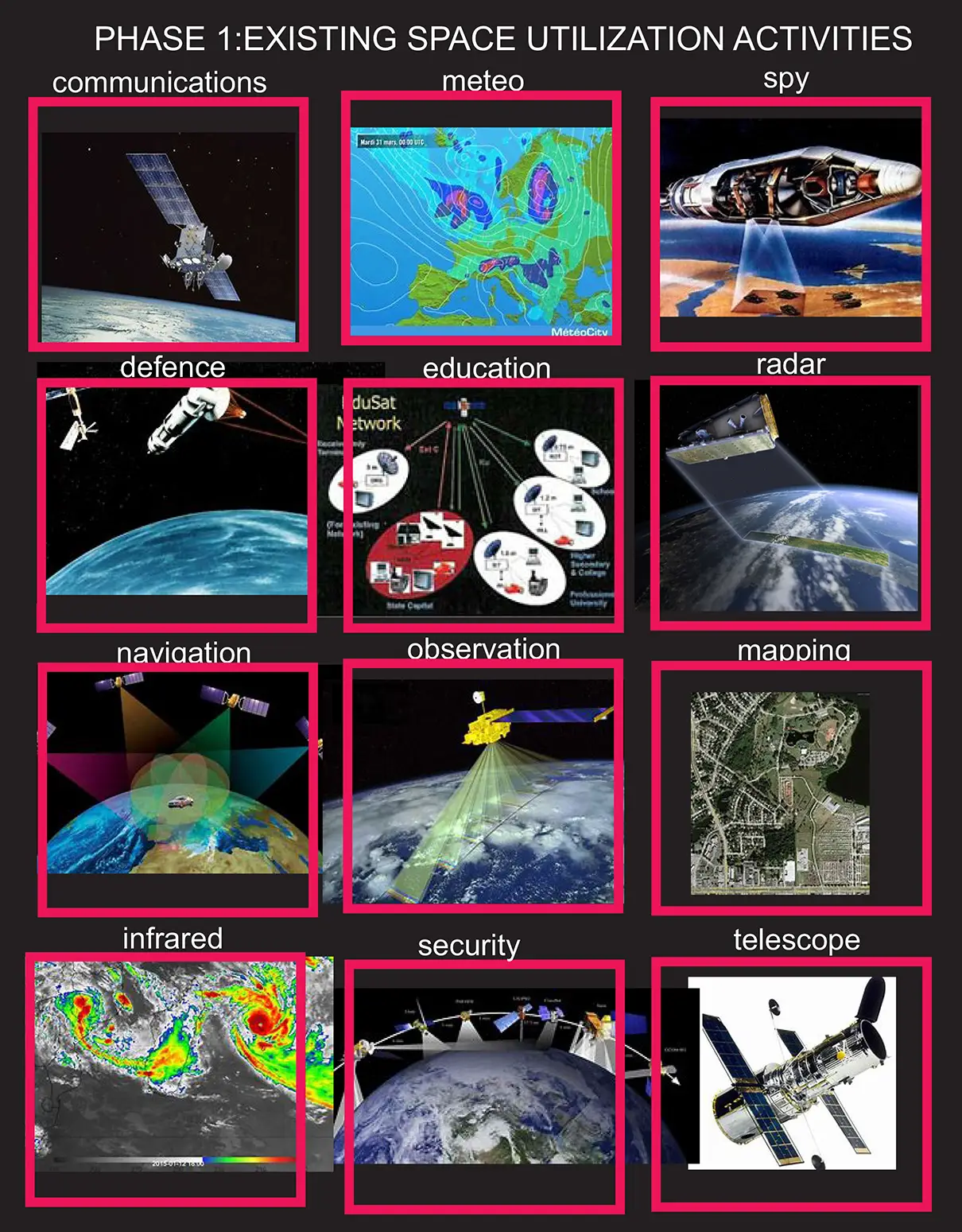
Figure 3: Phase 1 space utilization activities
4-Phase 2: Advancing Human Presence in Space
Phase 2 represents a transformative stage in humanity’s expansion beyond Earth, centered on establishing permanent human settlements on the Moon and initiating manned missions to Mars. These efforts lay the foundation for a lunar and Martian economy, catalyzing a new era of space-based commerce and industry. Concurrently, unmanned missions will explore and exploit resources across the solar system, including the moons of gas giants and the Pluto system, while asteroid mining experiments begin to unlock extraterrestrial wealth. This phase is projected to generate up to 10 million jobs, driving global innovation and economic growth.
Technological advancements will support this expansion. Key areas include propulsion systems, habitat design, life support (such as agriculture, food production, and waste treatment), mining, transportation, and infrastructure development. These interdependent technologies will foster a sustainable space economy across multiple sectors — manufacturing, professional services, and logistics.
Initial terraforming activities on Mars will begin in Phase 2, marking the first steps toward transforming hostile environments into habitable ones. While still in early stages, these efforts reflect humanity’s growing capacity to reshape planetary conditions in its favor. Artificial intelligence will play a central role, accelerating exploration and operations. However, the potential for AI to surpass human intelligence (the Singularity) introduces complex ethical and strategic challenges that must be addressed carefully.
Progress in Phase 2 will not result from a single breakthrough but from a network of parallel advancements across multiple fields, driven by research, economic interests, defense imperatives, and national ambition — similar to the dynamics observed during the Cold War. Each step, from crewed missions to technological infrastructure, builds toward the ultimate goal: interstellar travel capability. A strategic roadmap will be essential to coordinate these developments, ensuring that progress is structured, feasible, and aligned with long-term human aspirations in space. We will describe, as follows, some enabling technologies.
The cruiser feeder space transportation system
Propose an entirely reusable and affordable space transportation system based in two vehicles a cruiser and a feeder, transporting specialized containers from ground to space and back. The proposed space transportation system uses a Cruiser-Feeder model: cruisers cycle permanently between planets, while reusable feeder craft called Rings transfer cargo and passengers between surfaces and orbit. The modular cruiser includes a Service Module for propulsion, a Node Module for docking, and optional Habitat Modules for crew or settlers, enabling missions between Earth, the Moon, or Mars. Rings feature a ring-shaped design for easy ground-level loading/unloading, integrating engines, tanks, landing gear, and avionics within a compact frame. Standardized cylindrical containers, of a diameter of 6m, including manned ones, fit inside the Ring, varying in height to match payload needs. This system removes reliance on traditional launch infrastructure, enabling frequent, flexible operations between surface bases, orbiting cruisers, and space stations for sustained interplanetary logistics.
Simplified operations with no need for spaceports or specific and heavy equipment. A Vertiport type of facility equipped with a maintenance hangar and cranes for moving the ring and containers is all what is needed. Recommended: not localize the vertiport near existing airports since vertical take off and landing may interfere with aircraft operations.
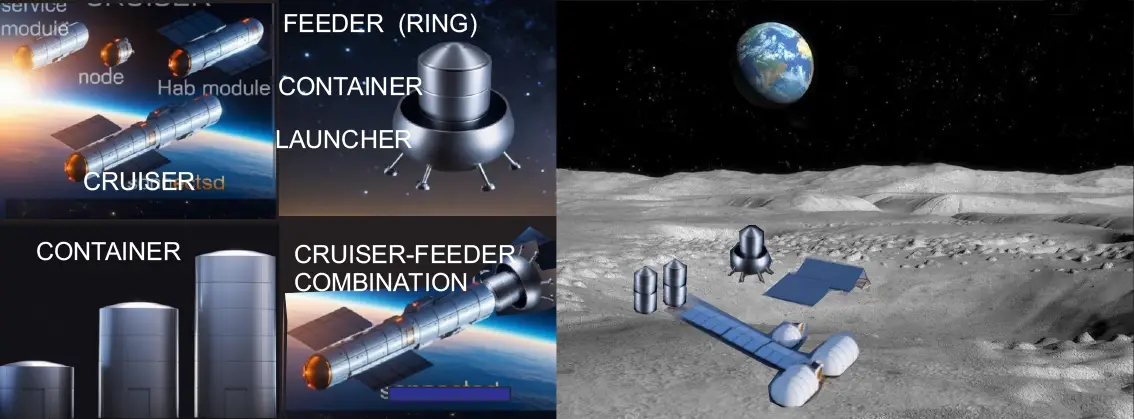
Figure 4: Cruiser-feeder system
Asteroid Retriever Vehicle
Propose an asteroid deflection and retrieval system designed for resource procurement and utilization in space, aimed at supporting future business ventures.
To access and utilize the vast resources available in space, we must develop a dedicated asteroid deflection and retrieval system. This system will employ a specialized spacecraft — called the Retriever Vehicle — capable of rendezvousing, docking with, and redirecting small asteroids (less than 500 Kilotons) or comets to extract valuable materials such as minerals and water. These resources will serve as raw materials for manufacturing and sustaining space operations.
The Retriever Vehicle must be equipped with the technology to:
- Match the asteroid’s speed, trajectory, and rotation (if present).
- Securely dock by drilling into multiple points on the asteroid’s surface.
- Capture and stabilize the asteroid using a metal net combined with an inflatable structure, ensuring complete containment and protection during the return journey.
- Redirect the captured asteroid to a designated processing location.
- Enable in-transit mining operations, fragmenting the asteroid into smaller pieces for easier mineral processing at the destination.
Asteroids are poised to become the primary source of minerals and other valuable resources in space, while comets could provide water essential for future settlements. The ability to retrieve and utilize these celestial bodies — potentially worth billions — could evolve into one of the most profitable industries of the near future. The proposed Retriever Vehicle would serve as the foundational technology to make this vision a reality.
Expected Innovators
Major terrestrial mining companies, venture capitalists, and private entrepreneurs could lead the development of asteroid retrieval services. These entities may either supply raw materials for customers or establish direct in-space manufacturing of metals and other materials on demand.
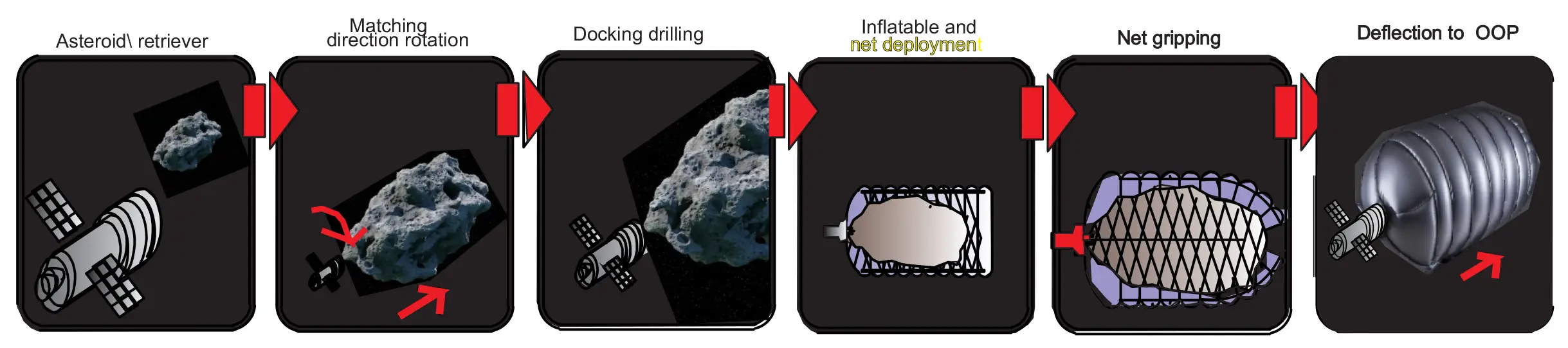
Figure 5: Asteroid retrieval sequence
The Multibody Spaceplane
Propose an entirely reusable and affordable space access system that operates with commercial airline-like simplicity. The concept utilizes a single hybrid spaceplane capable of taking off from and landing at conventional airports to reach Earth orbit.
Numerous studies have explored spaceplanes that can take off and land like regular aircraft using existing airport infrastructure. Both SSTO (Single Stage to Orbit) and TSTO (Two Stages to Orbit) architectures offer distinct advantages and disadvantages. Our proposed hybrid solution combines the strengths of both: a single aircraft at takeoff with a detachable booster that separates during flight. This configuration enables 90% of the total mass (fuel and engines) to be discarded when no longer needed, allowing the remaining 10% — the operational orbiter — to proceed and complete the orbital mission.
The multibody spaceplane integrates the best of both SSTO and TSTO technologies. It consists of two components — a booster and an orbiter — combined into a single aerodynamic structure at takeoff. The vehicle lifts off horizontally from a standard runway. The booster, powered by scramjets, accelerates the craft to Mach 6 or higher. At this point, the orbiter — forming the frontal section — detaches and continues alone to reach orbital velocity and complete the mission. The booster autonomously returns to the takeoff airport, while the orbiter, whether manned or unmanned, reenters and lands horizontally at the same airport.
Expected Outcomes
This approach enables simplified space operations, eliminating the need for launch countdowns, dedicated spaceports, or heavy support infrastructure. The multibody spaceplane could operate from conventional airports, drastically reducing costs associated with space access. Its airline-style operations and built-in maintainability would make frequent, low-cost missions a reality.
Expected Innovators
Commercial aircraft operators could provide ground-to-orbit transportation services at competitive prices, enabling a broader range of companies to operate in space. This would stimulate space development and open new markets to many new entrants.
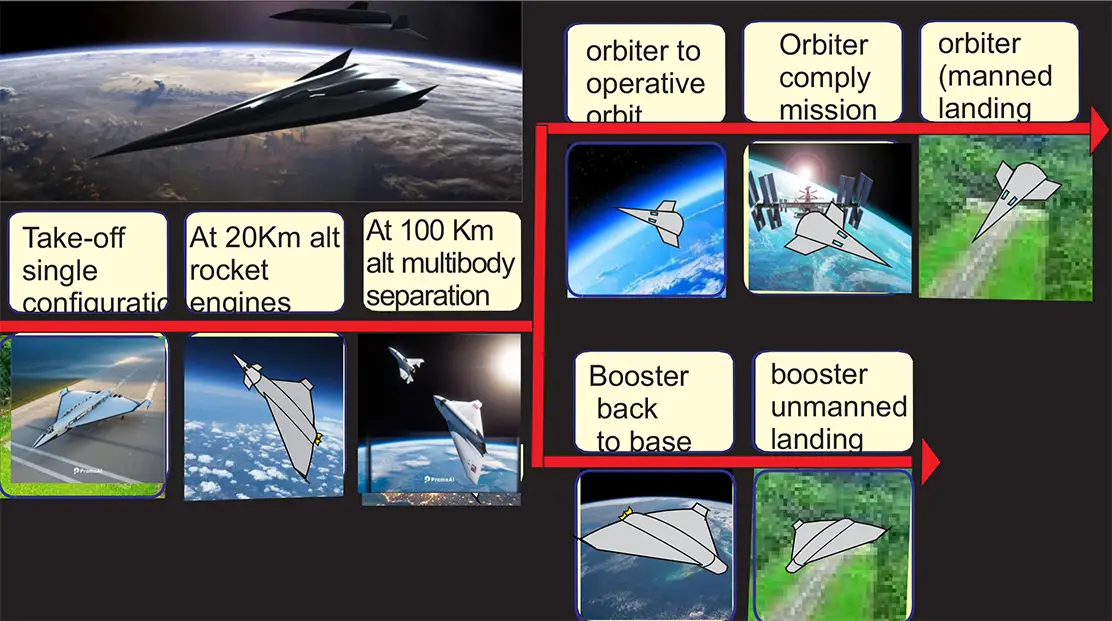
Figure 6: Spaceplane operations
Second-Generation Space Station
Challenge Statement: Design and construct a multifunctional space station upon the experience of the International Space Station (ISS), serving not only as a habitat but also as a terminal hub within a broader space transportation system. This next-generation station will feature artificial gravity, high levels of self-sufficiency, and the potential for expansion through modular components.
Problem Summary: A space station is a human-made orbital facility that allows humans to live and work in space for extended periods. Unlike other spacecraft, space stations typically lack propulsion systems, cannot land on planetary surfaces, and must be assembled in orbit due to their size and complexity. The proposed second-generation station differs significantly from its predecessors. It features a rotating ring-shaped design to generate artificial gravity via centrifugal force. This configuration allows for improved long-term human habitation by reducing the health risks associated with microgravity.
The station is composed of modular components, including:
A service module: Equipped with propulsion systems, engines, fuel tanks, and navigation/communication equipment, enabling orbital adjustments.
A central node module: Featuring five connection points — four lateral ports for rotation – supporting spikes and one axial port for docking incoming or outgoing spacecraft.
Telescopic spikes: Extendable modules that connect the central node to the outer ring, allowing the structure to spin and generate gravity.
An external ring: Hosting multifunctional modules for various purposes including laboratories, crew habitats, life support systems, food production, manufacturing facilities, and a spaceport terminal. These modules are scalable and can be customized according to mission-specific requirements. Hydroponic systems integrated into the inner walls of the spikes and ring modules will support on-site food production, improving sustainability. The modular design allows for future expansion by adding additional rings or modules as needed.
Expected Outcomes
This space station will simplify and enhance orbital operations by serving as a hub for:
- Supporting interplanetary cruisers and Earth-to-orbit feeders
- Performing maintenance and refurbishment of spacecraft and satellites
- Launching and assembling deep space missions
It will function as an orbital logistics and operations terminal, significantly advancing human capabilities in space.
Expected Innovators
A wide range of companies and organizations could develop, maintain, or operate specific functional modules. Potential responsibilities include:
- Life support systems
- Space debris removal and recycling
- In-orbit manufacturing
- Logistics for crewed and uncrewed missions
This approach fosters public-private collaboration and opens new commercial opportunities, accelerating the growth of the space economy.
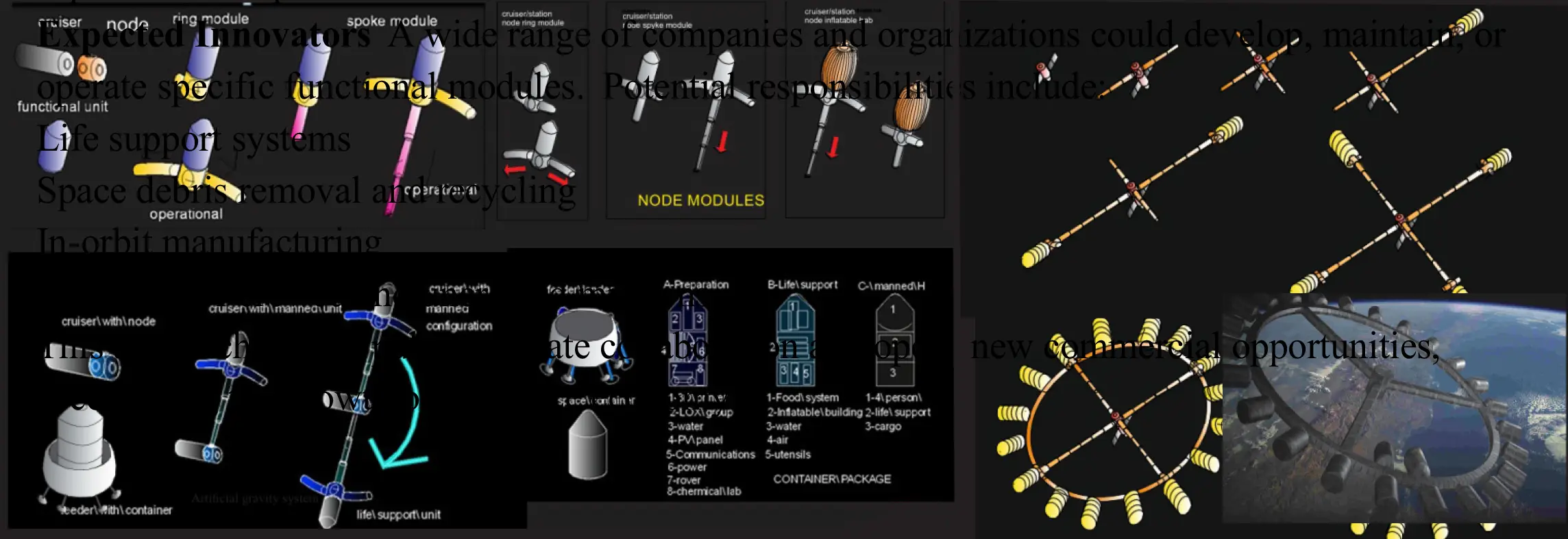
Figure 7: Second generation space station
Mission to Mars
Unlike the Moon where a full two way mission can be performed in a single week, seven days, a two way mission to the red planet would have a minimum of three years, half of them for travel time, nine months each for going and returning. While we would still utilize the cruiser feeder concept as the most suitable, long time exposure to zero gravity by a human crew has shown the enormous limitations due to such condition.
Astronauts return to our planet weak, falling to the ground and unable to perform essential functions. Such condition would be unacceptable for a Mars mission since the crew must arrive to the red planet in optimal physical conditions to perform the designated activities and to survive a year and a half on the planet surface. The cruiser that would transport the crew to Mars must create an artificial 1G gravity, by rotating around a center of gravity during the trip. The Starship proposed by SpaceX would be unable to create such gravity requirements and would render unfeasible any martian mission. Furthermore, to survive one and a half years on the surface of Mars, without counting on any terrestrial support, the selected site of arrival must be prepared for a fully self sufficient capability to produce food, health care, fuel, water and all other life support systems needed as well as the facilities and equipment to explore and prospect the planet’s resources and create a local technology as a logical goal for a first mission with a permanence of a year and a half.
The Essential Mars mission
Several proposals for a manned mission to Mars have been presented. Essential Mars is a proposal that emphasize the crew safety as well as the better way to obtain the needed information and create an operational outpost for the first human crew arriving at the Red planet, all with existing technology.
The goals could be synthetized as follows:
- Utilize existing technology
- Create a reusable space transportation system between our planet and Mars
- Eliminate risks due to long exposure by the crew to zero gravity conditions that can weaken the body after nine months of travel
- Prepare an operational outpost to receive the first crew with all life support system functioning, including water and food production
- Create artificial 1G gravity conditions during the trip
- Maximize utilization of advanced AI robotics units before and during manned presence
- Study utilization of local materials for construction, creating a new technology with martian concrete, steel and glass manufacturing
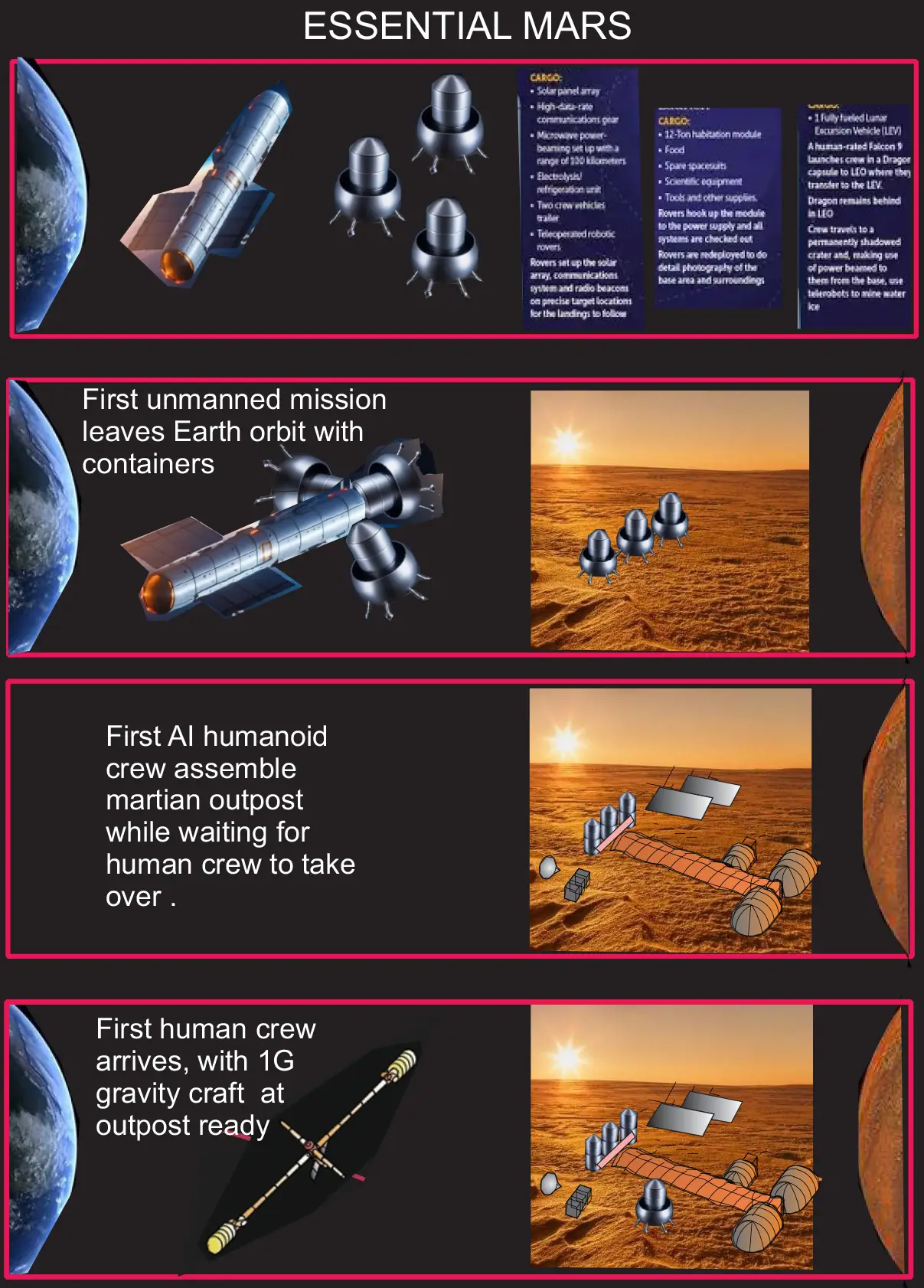
Figure 8: Essential Mars flow
5-Phase 3: Consolidation of space activities
Phase 3 heralds the dawn of a new era in human exploration, with the consolidation of the space economy and the beginning of space related Megaprojects such as the first space settlements, the terraforming of Mars, and the expansion to new bodies for exploitation.
Mars Terraforming will represent the biggest and most ambitious project in the history of humanity, emerging as the foremost undertaking in our quest to establish a second home for humanity. This monumental project is poised to create millions of jobs and catalyze the growth of a burgeoning space economy, representing one of the most significant endeavors in human history.
Space Settlements and Interplanetary Commerce
Space settlements will assume a central role in this burgeoning economy, serving as hubs for interplanetary business activities and providing essential infrastructure for sustainable habitation. The space sector is projected to create approximately 100 million jobs, fueling economic prosperity and fostering innovation on a scale never before seen.
Solar System Development
Across the solar system, efforts to develop celestial bodies will reach unprecedented levels, with manned underground settlements and unmanned bases for mining and mineral processing operations becoming commonplace. A diverse array of activities spanning business, primary, secondary, and tertiary sectors will contribute to the emergence of a robust Quadrillion-dollar economy. This flourishing economy promises to uplift the entire population, eradicating social issues such as poverty and petty crime.
Asteroid Mining and Resource Utilization
Asteroid mining and deflection will emerge as major industries, facilitated by the establishment of space factories aimed at reducing reliance on non-renewable resources on Earth. The development of a solar system-wide economy will be the hallmark achievement of this phase, paving the way for unprecedented prosperity and sustainability.
Diverse Business Activities
While Mars terraforming activities take center stage, a myriad of business endeavors, ranging from primary industries such as mining, mineral processing, and agriculture to secondary, tertiary, and quaternary sectors, will thrive in this dynamic environment. This phase represents a culmination of human ingenuity and ambition, propelling us towards a future where the boundaries of possibility are limited only by our imagination.
Let’s analyze the main projects of this phase
First generation settlement
The first generation space settlements will be a derivation of the expanded space stations that would follow the second generation progress since step by step advancements should be the rule in space development. For that reason we must first select a convenient configuration for this initial phase.
Various configurations have been proposed for space settlements, traveling, as a spaceship could be considered, or in fixed locations tailored to their specific functional requirements:
Torus: The most common design, allowing artificial gravity along the external perimeter. Expanded versions include the banded torus, beaded torus, and multiple beaded torus, all of which support phased assembly through modular additions.
Dumbbell Configuration: A simpler design comprising two modules connected by a corridor-like structure, which defines the rotation diameter for artificial gravity.
Sphere: Not recommended due to its ability to maintain consistent artificial gravity only in the equatorial belt.
Cylinder: An expanded variation of the torus, offering large areas with 1G artificial gravity.
Additional requirements will also influence settlement configurations:
Radiation Protection: Heavy shielding will be necessary to safeguard against harmful cosmic and solar radiation.
Artificial Gravity: Rotating habitats are required to recreate 1G conditions through centrifugal force.
Meteorite Collisions: Permanent settlements must incorporate robust shielding and an anti-collision system for early detection and deflection of large asteroids.
Resource Acquisition: Traveling settlements will need to harvest resources from asteroids and comets, processing them for specific metals. Water can be sourced from water-rich comets.
Habitat Expansion: To accommodate population growth and functional needs, settlements must allow for scalable expansion in a controlled manner.
An example of first generation settlement, due to the need of a step by step assembly and expansion to avoid too large volumes, the beaded torus is the most convenient.
The Settlement
The settlement will be a torus-type, ring-shaped volume, with habitat pods connected to the external ring.
The structure of the settlement will be based on a series of components forming a ring-shaped configuration rotating around a central hub. Such rings will connect the modular pods to the system, allowing the creation of artificial gravity (G1). All structures will be composed of 90% titanium and 10% aluminum for optimal strength. The structural system is composed of cylinders forming the primary structure. These will include straight vertical and curved beams of varying lengths and diameters in accordance with their functions. The central hub, which houses the space elevator terminal (the only non-rotating system in the settlement), will include a rotating ring connected by spokes to the more external rotating rings.
The same axis will connect to another larger torus ring for future manufacturing activities, including mineral storage for processing and transformation into necessary materials.
The spikes system will be connected to the central hub and composed of cylindrical modules (4m in diameter) that reach and connect the ring. The structure must be rigid enough to support rotational forces without deformation. The cylinders will be built with T-shaped curved beams of proper dimensions, connected to linear beams to form the cylinders. The most external ring will be composed of curved modules (4m in diameter), with lengths designed to fit the space elevator cabin, allowing transportation and connectivity among all habitat pods.
The pods will have a soapbox-like shape with curved lines and varying dimensions.
The external structure will gain additional rigidity through a secondary system supporting different levels.
Finished parts will be manufactured on Earth and delivered via the space elevator to the assembly site in space, where robotic systems will connect them.
The first-generation settlement’s primary operational module will be the pod. The main reason is to have the settlement operational in a much shorter time than with a more conventional but larger shape. These will be connected to the external ring and consist of self-sufficient units measuring 40 meters wide, 25 meters high, and 60 meters long. Pods will be interconnected to create operational areas.
In the first-generation settlement, the primary operational modules will be the pods — self-sufficient units directly connected to the external ring structure. These pods will serve as the fundamental building blocks of the settlement’s habitable and functional space.
Pod Configuration and Dimensions
Each pod will measure approximately 40 meters wide, 25 meters high, and 60 meters long. They will be attached both to the rotating ring and to adjacent pods, creating a continuous and integrated operational structure.
The pods are divided into three main levels, from top to bottom:
1. Residential Level (Upper Level):
This level will house the living quarters and essential services for residents.
- Housing units will include private gardens and small exterior areas to ensure a comfortable living environment.
- Modules are modular and interchangeable to accommodate various family compositions.
- This level also includes:
- Kindergarten and primary schools
- First-aid stations
- Recreational areas for all age groups, located in dedicated residential pods
- Each pod is connected via passageways to neighboring pods, allowing free movement and social interaction.
2. Community Level (Middle Level):
Serving as the social and operational core, this level includes all community and work-related facilities.
- Features landscaped areas with water pools that flow throughout the settlement for both aesthetics and psychological well-being.
- Main public buildings and shared amenities include:
- Sports areas and entertainment facilities
- Hospitals, high schools, and colleges
- Civic centers and event venues
- Offices, laboratories, TV studios, meeting spaces
- Religious buildings and museums
- A central connector runs through this level, providing access to all pods and continuity with the outer ring.
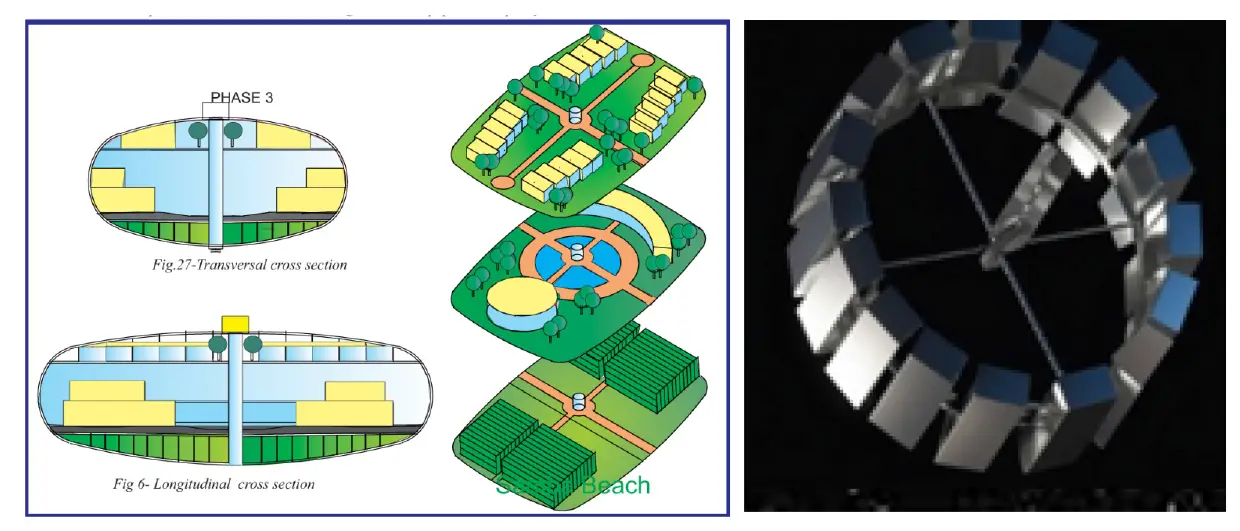
Figure 9: First generation space settlement with pods
Terraforming Mars – Motivations and Goals
Terraforming Mars involves transforming the planet’s harsh environment into one capable of supporting human life. This concept has captured human imagination for decades and is driven by a blend of scientific, survival, technological, economic, and philosophical motivations.
A major reason for terraforming Mars is to ensure humanity’s long-term survival. Earth faces multiple existential threats, such as nuclear war, climate change, pandemics, and asteroid impacts. Establishing a permanent human presence on Mars would provide a backup for civilization — a planetary insurance policy that could protect humanity from total extinction.
Scientific curiosity also plays a significant role. Mars offers insights into planetary evolution, climate systems, and the possibility of past life. Terraforming the planet would allow long-term ecological and atmospheric experiments that are impossible on Earth. Such efforts would expand knowledge about the conditions needed for life and help us better understand our own planet.
Technological advancement is both a necessity and a benefit of the terraforming process.
Overcoming the enormous challenges of transforming Mars would require innovation in energy systems, climate engineering, robotics, and life-support infrastructure. The breakthroughs could later be adapted to address environmental and sustainability issues on Earth, making the endeavor not only visionary but also practical.
Economically, terraforming Mars could stimulate a new era of industrial growth. It would create hundreds of thousands of jobs in sectors like aerospace, engineering, and science, both on Earth and on Mars. The planet may also hold valuable resources, such as rare metals, that could support future space economies. As the space sector continues to expand, Mars could become a key driver of global innovation and commerce.
Philosophically and culturally, the idea reflects humanity’s deep-rooted desire to explore and expand. For some, spreading life beyond Earth is a moral obligation —to preserve the continuity of life in the cosmos. It also opens the possibility of rethinking how we build societies, possibly improving governance or sustainability based on lessons from Earth.
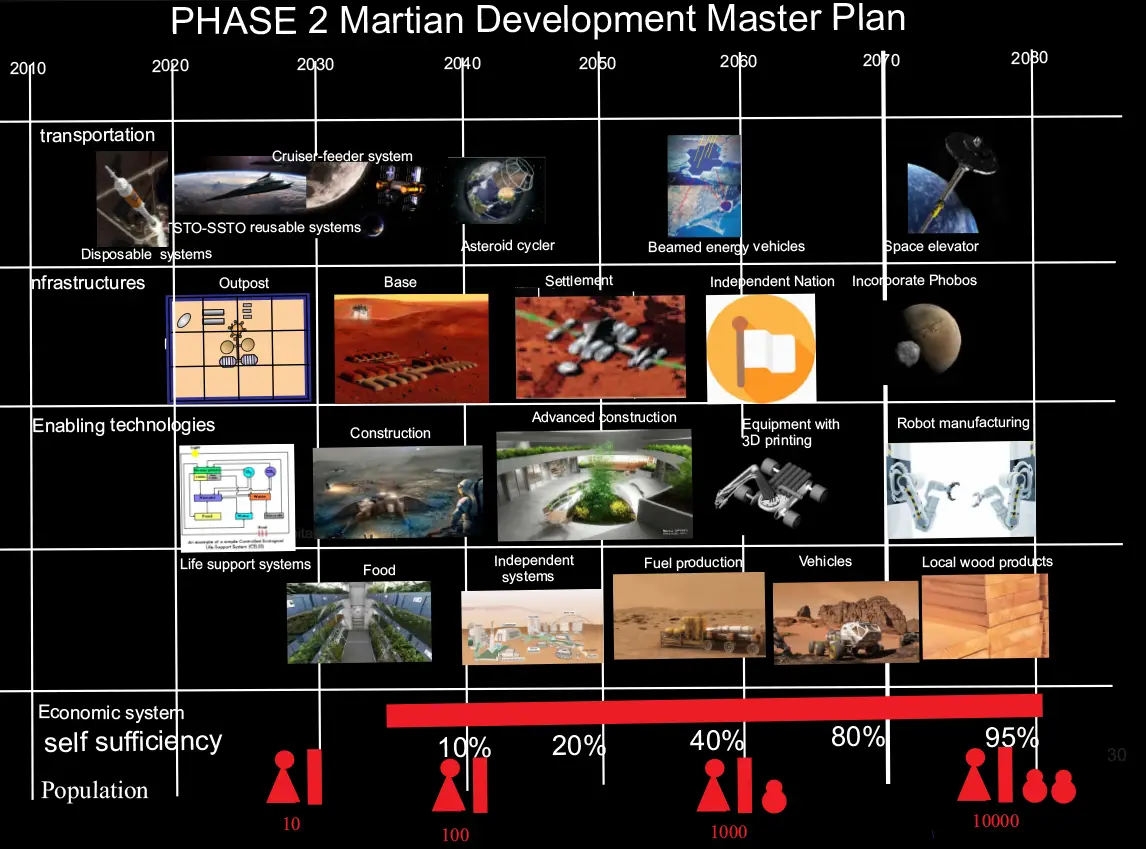
Figure 10: Mars development development Master Plan
The technical goals of terraforming include warming the planet, thickening its atmosphere, and introducing oxygen-producing organisms. By triggering a greenhouse effect using CO2 from polar ice and soil, scientists aim to create liquid water and begin developing a habitable environment. Ultimately, terraforming Mars represents a bold step forward — combining survival, science, and hope to shape the future of humanity beyond Earth.
6-Phase 4: Solar System Colonization
In Phase 4 of space colonization, humanity transitions into a truly interplanetary civilization. Mars, partially terraformed and thriving, leads the charge with a population in the millions and a fully self-sustaining economy. It becomes not just a scientific outpost, but an essential part of human civilization. The focus of this phase is the large-scale expansion of human presence and economic activity throughout the solar system.
Across various celestial bodies — from Mercury’s extreme surface to Jupiter’s icy moons — underground settlements and unmanned mining operations multiply. These installations unlock vast economic potential and mark a new era of resource utilization and planetary integration. This expansion is driven not only by exploration but also by the pursuit of raw materials and the desire to build a resilient, multi-planetary society.
The extraterrestrial economy becomes a major engine of growth, projected to create around 1 billion new jobs. These range from resource extraction and manufacturing to high-tech services and logistics. The result is explosive economic development across all sectors, fueled by the availability of extraterrestrial resources and continuous innovation. Underground terraforming technologies enable rapid territorial growth beneath planetary and lunar surfaces, significantly increasing habitable space.
Asteroids and comets become central to this expansion. Small asteroids (20-100 meters) are captured and redirected for mining, providing essential materials for construction and manufacturing. Larger asteroids (1–2.5 kilometers) are hollowed out to serve as mobile space habitats or long-duration generation ships. These resource-rich bodies serve as platforms for both near-term development and future interstellar missions.
Terraforming continues on Mars, while increasingly complex missions target new frontiers. Most space operations begin with unmanned AI systems, paving the way for human crews. Space travel becomes faster, more efficient, and affordable, allowing for regular transport of people and goods. Even the distant Kuiper Belt begins to host human and AI-driven bases, greatly expanding the boundaries of human reach.
Base development follows a standardized, automated sequence: first, probes conduct geological mapping and sampling; then, humanoid robots install infrastructure and begin mining; finally, full-scale mineral processing facilities are deployed. These bases operate autonomously, refining raw materials for distribution across the solar system.
Phase 4 marks a dramatic shift in human history — an age defined by planetary-scale innovation, economic expansion, and humanity’s permanent foothold among the stars.
Second Generation Space Settlements
During Phase 4 of solar system colonization, second generation space settlements emerge as large, multifunctional habitats in space. These include artificial planets, motherships, and worldships, each designed to serve specific roles in sustaining and expanding human presence beyond Earth.
Artificial planets are massive orbital settlements, each supporting populations of over 100,000 people. Positioned in fixed orbits near resource-rich locations like moons or asteroids, these structures are more than simple habitats — they are advanced megastructures capable of generating their own artificial gravity, typically close to 1G. These self-contained environments also support complex ecosystems, enabling long-term human habitation and economic activity. Though still theoretical, artificial planets draw heavily from both scientific proposals and long-standing concepts in science fiction.
Motherships play a different but equally vital role. These large spacecraft act as mobile bases, capable of deploying, carrying, or supporting smaller vehicles and missions. Their design is inspired by maritime and aerial analogues, such as ships that carry submarines or aircraft that launch experimental planes. In space, motherships may function as hubs for exploration, recovery, and support, assisting both human and robotic missions across the solar system. They enable rapid response, mobile logistics, and scalable expansion into new territories.
Worldships represent the most ambitious type of space settlement — designed for interstellar travel. Unlike orbital settlements or solar -bound ships, worldships are self-sustaining interstellar vehicles built for journeys that last centuries. They carry entire communities, along with the resources and ecosystems required to maintain life over multiple generations. These ships travel at a fraction of light speed and are intended to reach star systems far beyond our own. The feasibility of worldships was notably explored by Alan Bond and Anthony Martin, but significant challenges remain, including knowledge transfer over generations, structural reliability, and mission architecture.
All three settlement types share a focus on autonomy, sustainability, and adaptability. As human civilization spreads through the solar system, these structures support economic development, scientific research, and cultural growth on an unprecedented scale. Artificial planets act as permanent homes, motherships support exploration and logistics, and worldships offer pathways to the stars. Together, they mark the next evolution in human space colonization — ushering in a new era of life beyond Earth that is decentralized, mobile, and interstellar in ambition. This advanced generation of settlements reflects humanity’s growing capability and determination to adapt, innovate, and thrive in the cosmos
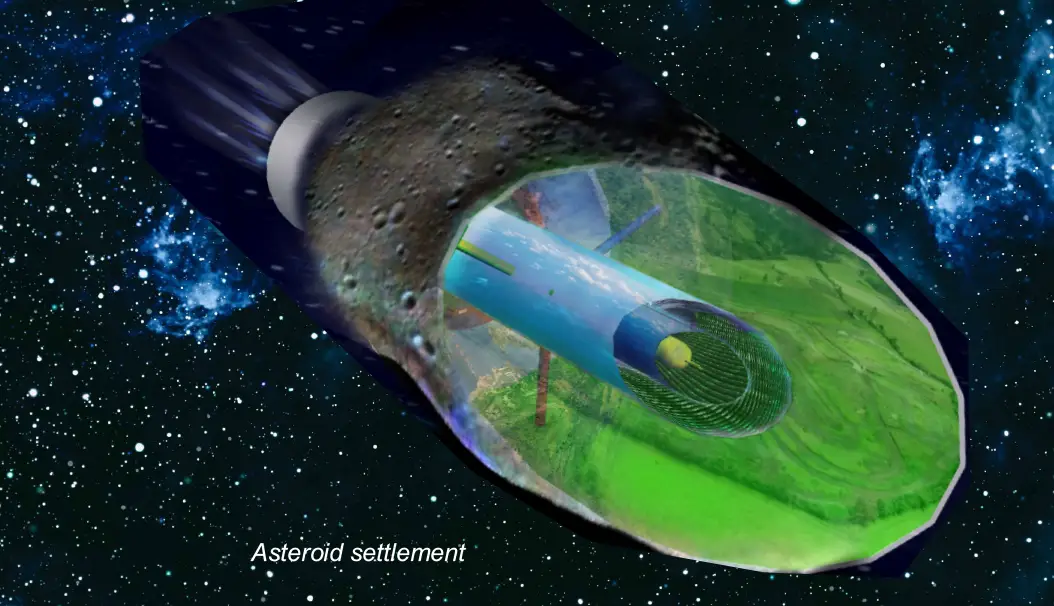
Figure 11: Asteroid settlement
Underground Terraforming: A Practical Path to Space Habitation
Underground terraforming is an innovative approach to making extraterrestrial environments habitable by focusing on localized, subsurface habitats rather than large-scale planetary transformation. Originally a concept popularized by science fiction, terraforming typically envisions altering an entire planet’s atmosphere and surface to support Earth-like life — a process expected to take centuries, require unknown technologies, and demand enormous resources. Underground terraforming offers a more feasible, immediate alternative by leveraging natural protection and scalable construction underground.
The core idea involves creating protected, livable spaces beneath the surfaces of moons, planets, or asteroids. Natural formations such as lunar lava tubes, Martian caves, or pits provide ideal environments by shielding inhabitants from cosmic radiation, micrometeorite impacts, extreme temperatures, and the vacuum of space. These natural shelters minimize the need for heavy radiation shielding and temperature control, reducing habitat construction complexity. Where natural caves are absent or insufficient, artificial underground structures can be excavated using robotic technologies. These subsurface habitats allow for controlled environments with Earth-like atmospheric conditions, temperature regulation, and integrated life-support systems. This approach benefits from using in-situ resource utilization (ISRU), minimizing the need to transport large amounts of materials from Earth, and enabling gradual, modular expansion.
Underground terraforming is characterized by several key features:
- Small-volume, stepwise expansion: Habitats can grow incrementally as technology and resources allow, reducing upfront costs and risks.
- Resource efficiency: Utilizes local materials for construction, shielding, and life support, lowering mission mass.
- Natural environmental protection: The subsurface location inherently protects inhabitants from harsh surface conditions, radiation, and micrometeorites.
- Flexibility and scalability: Designs can adapt to diverse planetary bodies, from the Moon to Mars and beyond, making this approach widely applicable.
- Immediate implementation potential: Robotic excavation and habitat construction can begin with current or near-future technology, accelerating human presence beyond Earth.
By focusing on underground habitats, this method bypasses the enormous challenges of full planetary terraforming while still enabling sustainable human settlement. It represents a strategic foundation for expanding human civilization across the solar system, providing safe, livable environments on otherwise hostile worlds. The underground terraforming approach promises to revolutionize space colonization by making it more affordable, feasible, and adaptable in the near term.
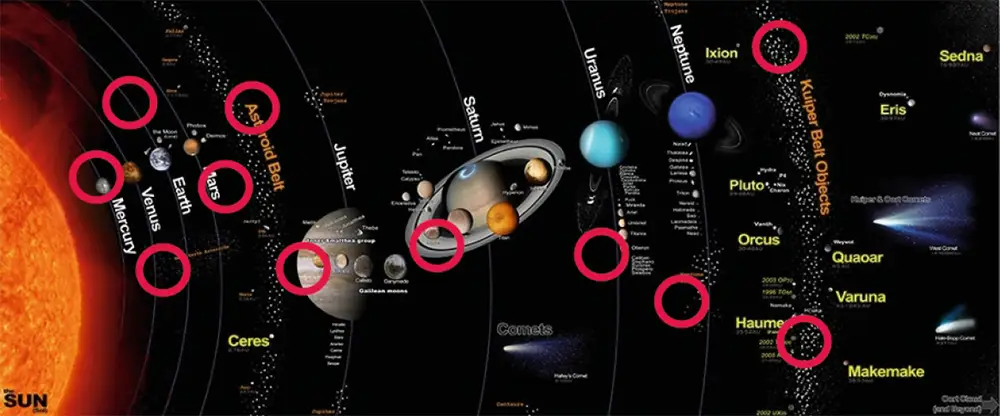
Figure 12: Network of settlements
7-Phase 5: Interstellar Travel
The final phase of our development plan heralds the dawn of interstellar travel, opening the door to boundless expansion for the human species. Advanced space settlements, resembling artificial planets, will colonize exosolar planetary systems that were once deemed inhospitable to human habitation. Concurrently, unmanned bases will be established across entire planetary systems, laying the groundwork for future exploration and resource utilization.
Expanding Horizons
This phase holds the potential to create up to 10 billion jobs, contingent upon the conditions encountered in newly explored territories. As humanity ventures into the vast expanse of interstellar space, limitless business opportunities will unfold, spanning both manned and unmanned activities. From pioneering scientific research to resource extraction and commerce, the possibilities for economic growth and innovation are limitless.
A Journey Beyond
With the completion of Phase 5, humanity will have reached the culmination of its journey from humble beginnings to interstellar pioneers. Our society, currently at the end of Phase 1, stands on the threshold of Phase 2, poised to embark on the next stage of exploration with plans for the return to the Moon by several players. As we stand at the precipice of a new frontier, the spirit of exploration and discovery continues to drive us forward, guiding our path towards a future where the stars themselves are within reach.
Motivations and Goals for Interstellar Space Development
The drive to develop interstellar space capabilities stems from a broad range of motivations spanning science, technology, economics, defense, survival, and human advancement.
Science and Technology Motivations:
Exploring other stellar systems deepens our understanding of the universe and accelerates scientific progress. Interstellar travel encourages international collaboration on long-term space projects, fostering a global culture centered on exploration and discovery. The challenges of interstellar travel promote advancements in science and technology, which can spill over into educational benefits and inspire future generations. Curiosity — the fundamental human urge to explore the unknown — remains a core motivator, alongside creating new frontiers for human endeavor and adventure.
Economic Motivations:
Expanding into interstellar space promises to enlarge existing economies and create new ones. This expansion includes developing new technologies, accessing untapped territories, and harnessing resources to sustain a growing human population. The resulting space-based economies could provide high returns on investment and drive productivity, supporting both Earth-bound and space-based societies.
Defense Motivations:
Interstellar development accelerates progress in planetary defense systems critical for protecting Earth and its satellites. As outer space grows increasingly contested, maintaining security protocols, managing non-proliferation issues, and establishing collaborative defense frameworks become vital. Technological advancements driven by interstellar ambitions contribute to safeguarding fragile low Earth orbit (LEO) assets and ensuring peaceful cooperation in space.
Survival Motivations:
Human survival is a paramount motivation. The threat of catastrophic events such as asteroid impacts, pandemics, climate change, or systemic infrastructure failures underlines the need for autonomous space habitats and colonization programs. Expanding human territories beyond Earth offers new resources and energy sources crucial for humanity’s long-term endurance. Interstellar colonization also serves as a hedge against existential risks and as a response to the potential challenge posed by advanced artificial intelligence.
Human Conditions Motivations:
Interstellar space offers a destination for individuals seeking to build new futures beyond Earth. It opens the possibility of permanent, moving frontiers where human civilization and values can evolve independently, fostering new cultures and societies. The potential for multiple inhabited worlds could diversify human experience and identity, fulfilling a deep-seated desire to explore and expand.
Goals for Interstellar Technologies:
The primary goal is to expand humanity’s domain from a single planet to interstellar territory, vastly increasing population capacity, resources, and economic reach. Ensuring survival by becoming a multi-planetary and eventually multi-stellar species remains a critical objective. Another goal is the discovery and colonization of planets suitable for human life, offering new homes for an expanding population.
Developing new economies through territorial expansion will generate jobs and wealth, while advancements in space technologies could help solve terrestrial challenges by providing new resources and innovation pathways. Defense concerns also drive the push for interstellar capability, anticipating possible encounters with technologically advanced extraterrestrial civilizations and the need to protect Earth.
Finally, enhancing human physical and mental conditions through technological augmentation is envisioned, alongside profound scientific and technological breakthroughs. The opening of the interstellar frontier may catalyze transformative progress, potentially triggering new technological singularities and reshaping humanity’s future.
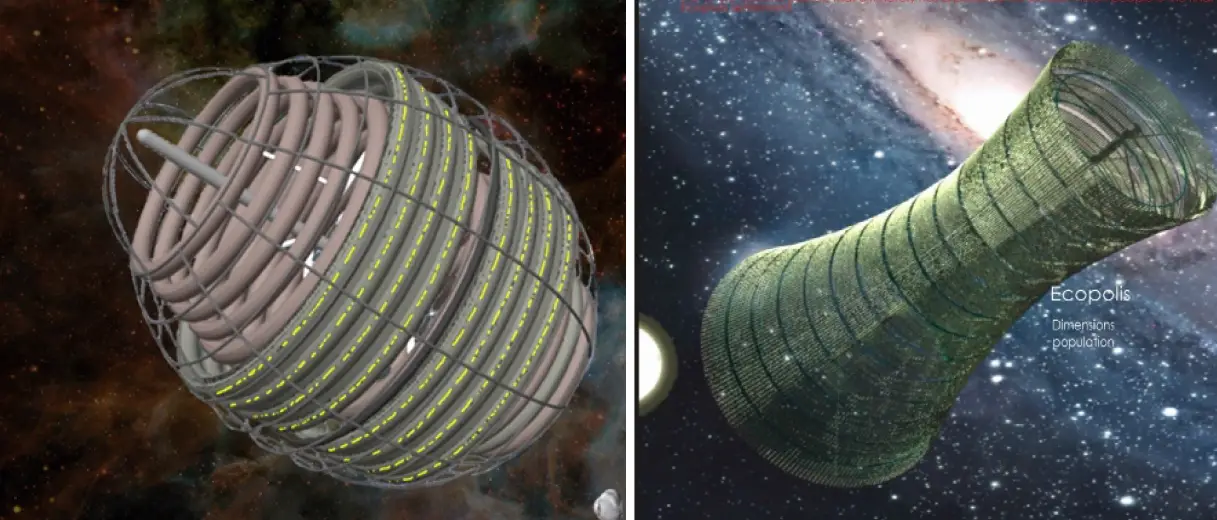
Figure 13: Worldship artificial planet
Conclusion
Humanity today remains largely preoccupied with inherited global challenges — persistent social and environmental crises, resurging nationalism, power struggles, and a lack of visionary leadership. Blinded by these issues, we have yet to fully recognize that space development — offering virtually unlimited resources, territories, and opportunities — holds the key to addressing and ultimately resolving many of Earth’s deepest problems. Harnessing the potential of space could generate unprecedented wealth, eradicate poverty, and move humanity beyond survival-based mindsets.
With the emergence of superintelligent artificial intelligence, we stand on the brink of exponential progress. By embracing the vast, untapped expanses of space, we can initiate a new era of limitless growth.
Progress in space development hinges not only on building the necessary tools and technologies to explore and colonize new worlds, but also on defining clear, ambitious goals and long-term strategies. When guided by vision and purpose, our civilization can take its next historic leap — from a single-planet species to a multiplanetary civilization.
Converging breakthroughs in biotechnology, neuroscience, and AI promise to redefine what it means to be human. We may soon see the rise of enhanced individuals free from disease, equipped with brain-computer interfaces, capable of uploading consciousness, and potentially living for centuries.
Our destiny lies far beyond Earth. Expanding into the solar system — and eventually to distant star systems — will ensure the survival of our species, enrich human culture, and guard against existential threats. While we do not yet know whether other intelligent civilizations exist, the immense number of potentially habitable planets makes it a distinct possibility. Meeting a more advanced extraterrestrial species could challenge our very survival, just as the Aztecs, Incas, and Maya were overwhelmed during the Spanish conquest. To prepare for such possibilities, we must become stronger, more resilient, and widely dispersed throughout the cosmos.
Solar system colonization first Interstellar later on offers humanity an open horizon for innovation, growth, and exploration. It is the ultimate stage of our evolution — the final frontier where our deepest aspirations may be realized, and our legacy secured. Now is the time to take the first steps toward this extraordinary future. The stars await us — not merely as destinations, but as the next canvas for human achievement.
Bibliography
Mapping the future, Giorgio Gaviraghi, Lambert ED 2024
Space Settlements – A Design Study. NASA SP-413, 1977 U.S. Government Printing Office
Space Resources and Space Settlements. NASA SP-428, 1979 U. S. Government Printing Office
Space Mission Analysis and Design. Larson / Wertz, 1992 Microcosm, Inc.
Introduction to Space – The Science of Spaceflight. Thomas D. Damon, 1989 Orbit Book Company / 1995 Krieger Publishing Company
Keys to Space – An Interdisciplinary Approach to Space Studies. Houston / Rycroft, 1999 McGraw-Hill
How Spacecraft Fly. Graham Swinerd, 2008 Praxis Publishing Ltd.
The Space Environment – Implications for Spacecraft Design. Alan C. Tribble, 2003 Princeton University Press
Entering Space – Creating a Spacefaring Civilization. Robert Zubrin, 1999 Tarcher / Putnam
Colonies in Space. T. A. Heppenheimer, 1977 Stackpole Books
The High Frontier (3rd Edition). Gerard K. O’Neill, 2000 Apogee Books
Space Enterprise. Philip Robert Harris, 2009 Springer – Praxis
Encyclopedia of the Solar System. Weissman / McFadden / Johnson, 1999 Academic Press
Introduction to the Space Environment (Second Edition). Thomas F. Tascione, 1994 Krieger Publishing Company
Astronomy Today (Third Edition). Chaisson / McMillan, 1999 Prentice Hall
The Lunar Base Handbook. Peter Eckart, 1999 McGraw-Hill
Lunar Outpost–The Challenges of Establishing a Human Settlement on the Moon. Erik Seedhouse, 2009 Springer-Praxis
The Moon – Resources, Future Development, and Colonization, 2nd Edition. Schrunk / Sharpe / Cooper / Thangavelu, 2008 Springer – Praxis
Lunar Sourcebook – a user’s guide to the moon. Heiken / Vaniman / French, 1991 Cambridge University Press
The Case for Mars. Robert Zubrin, 1996 The Free Press (Simon & Schuster, Inc.)
Strategies for Mars: A Guide to Human Exploration. Stoker / Emmart (Editors), 1996 American Astronautical Society
On to Mars – Colonizing a New World. Zubrin / Crossman, 2002 Apogee Books
Asteroids – Their Nature and Utilization (Second Edition). Charles T. Kowal, 1998 Wiley / Praxis
Mining the Sky – Untold Riches from the Asteroids, Comets, and Planets. John S. Lewis, 1996 Addison-Wesley Publishing Company
Understanding Space – An Introduction to Astronautics. Jerry Jon Sellers, 2000 McGraw-Hill
Elements of Space Technology. Rudolf X. Meyer, 1999 Academic Press
Systems Engineering Principles and Practice. Kossiakoff / Sweet, 2003 John Wiley & Sons, Inc.
Spacecraft Systems Engineering. Peter Fortescue / John Stark, 1995 John Wiley and Sons
Elements of Spacecraft Design. Charles D. Brown, 2002 American Institute of Aeronautics and Astronautics
Space Vehicle Design, Second Edition. Griffith/French, 2004 American Institute of Aeronautics and Astronautics
Biography for Giorgio Gaviraghi

Portrait of Giorgio Gaviraghi
Giorgio Gaviraghi received his Architectural degree from the Milan Polytechnic followed by a number of graduate courses in management, marketing and design in several major universities.
At first as Project Architect, later as Project Manager, where he was responsible to deal with international projects for the Austin Co. an international design and construction company, he has built a distinguisble career across the globe also acting as CEO for international companies operating in Europe, the US, Latin America and the Middle East in the field of design and construction, aerospace facilities, real estate and touristic resorts development. As a product designer, he was responsible for the design of the first all plastic chair by Kartell in 1965 as a student.
Giorgio has specialized in space architecture for advanced projects and proposals for major space agencies. Winning as tutor for college and high school students over 30 prizes in international space settlements and space related projects.
Author of over 80 papers ranging from space, transportation, city planning, design and other topics, including authoring articles and books, the latter Mapping the future by Lambert Pub.
Giorgio has delivered several college courses at universities in Europe and Latin America. Lately, a professor at UFMT in Brazil teaching Astronautics and Exponential Creativity a disruptive post graduate course.