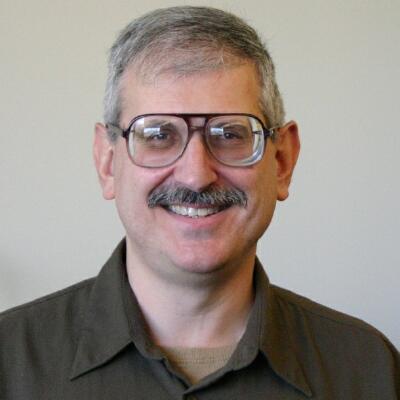
Larry Bartoszek has a dual degree in Mechanical Engineering and Physics from the University of Illinois and is an Illinois Licensed Professional Engineer. He is a member of the American Society of Mechanical Engineers, the American Welding Society, ASM International, the Chicago Society for Space Studies, the National Space Society, and is Vice President of the International Space Elevator Consortium. He is also a Space Ambassador for the NSS.
Larry Bartoszek owns Bartoszek Engineering, a consulting firm which specializes in mechanical designs for the nuclear and high energy physics research community world-wide. Bartoszek Engineering has worked for many national laboratories, universities and governments on experiments all over the world. He has built machines up to three stories tall and 120 tons, as well as table top devices. His website is www.bartoszekeng.com. A chronological history of the projects BE has worked on can be found at: www.bartoszekeng.com/STEM/All_projects.pdf
Larry started working on the Space Elevator as a hobby in 2004 developing conceptual designs for climbers as outlined in “The Space Elevator” by Edwards and Westling. He has given presentations at several Space Elevator Conferences, including Washington, DC, 2004, the Space Elevator Conference in Seattle in 2013, and the ISEC Annual Conference in Chicago in 2023, 2024, and virtually in 2025. Larry has created original designs for the climbers for the Space Elevator which have been published in two annual ISEC study reports. He became a Director on the Board of the International Space Elevator Consortium (ISEC) in April, 2021. In July of 2024 Larry was elected Vice President of ISEC.
A webinar he gave for the International Space Elevator Consortium in April of 2022 can be seen at www.youtube.com/watch?v=0Q8cMGxIccI
Talks and Presentations
The History of the Universe Starting with the Big Bang
The talk will describe how the universe changed from moment to moment starting with the earliest things we can know about the Big Bang. Work from experiments such as COBE, WMAP, Planck and LIGO will be used to show how we know things that happened “A long time ago in a galaxy far, far away.” I will give a broad overview of modern cosmology, showing the successes of the Standard model of cosmology as well as pointing out the controversies and unknowns. Dark matter and Dark Energy will be discussed, and their roles in the evolving Universe.
The Connection Between the Periodic Table and Astronomy
This talk will describe the intimate relationship between astronomy and the Periodic Table by looking at how everything we learn about the distant Universe comes from dissecting starlight and starlight comes from excited atoms changing their energy states. We will start with a brief history of the Universe to see where atoms come from and the forces that hold them together. We will discuss how the electron shell structure of the atom allows them to give off light and organizes them into the Periodic Table. We will look at how the light from distant atoms in stars and galaxies changes as the galaxies move away from us. We will see how spectroscopy on starlight leads to the expansion of the Universe and the acceleration of the expansion now thought to be caused by Dark Energy. All of this comes from an understanding of the unique “fingerprints” of atoms in the light they give off. Larry will also show the work that he did on the Sloan Digital Sky Survey Telescope.
Settling the Solar System
Starting with Al Globus’ idea for Equatorial Low Earth Orbit habitats, we will look at the most promising places for human settlement of the Solar System. We’ll take a tour of the planets, moons and comets to see what life would be like in different gravities, very far or very close to the Sun, and what radiation hazards each location poses. We’ll see how to make a home in space.
The Space Elevator and Moving Into Space
This talk will cover the basic concepts of the Space Elevator as conceived by Bradley Edwards and Eric Westling in their book “The Space Elevator—a revolutionary Earth-to-Space Transportation System”. Once we have a space elevator, the cost to get to orbit should plummet and the colonization of space can begin. Larry Bartoszek has done some original design work on the first construction climber needed to strengthen the space elevator after its initial deployment. Climbers are electric vehicles that roll straight up the elevator ribbon and out of Earth’s atmosphere. There are many subtleties in climber design. After covering the design and some challenges in building the space elevator, we will talk about what the elevator will be good for. I will show the vision of Gerard K. O’Neill who wrote “The High Frontier”. Dr. O’Neill conceived of an entire industry on the moon and in cislunar space building giant free floating habitats that humanity can move into. (The movie “Elysium” shows a variation on the habitat known as the Stanford Torus.) There are many advantages of free-floating space settlements over planet and moon-based colonies. (I can also separate these into two different talks, one focusing just on the space elevator, and one focusing on Gerard K. O’Neill’s ideas.)
The Periodic Table
This talk answers basic questions about the structure of matter. What are atoms made from? What are elements? Where did they come from? How do stars make elements? The life cycle of stars is shown, and why it took so long to organize the Periodic Table. We will cover a very brief history of the Table. A number of different styles of Periodic Table will be shown, as well as the not-so-well-known Table of Isotopes. I will talk about the different kinds of radiation and discuss my training from Fermilab on how to protect your body from different kinds of radiation. (I have given this talk to 5th graders and to Mensa Gatherings. I always try to tailor what I show to the particular audience.)
The Sloan Digital Sky Survey
This talk will focus on the history, technology, and impact of the Sloan Digital Sky Survey (SDSS). The Alfred P. Sloan Foundation sponsored the Sloan Digital Sky Survey, which began with a new telescope at Apache Point Observatory near Alamagordo, New Mexico. The Sloan Digital Sky Survey was the most ambitious astronomical survey ever done. It has a 120 megapixel digital camera and two spectrographs. It was the first time an astronomy project collected data the way a high energy physics experiment does, and that is why the Fermi National Accelerator Laboratory became involved. The author worked at Fermilab under John Peoples, the third director of SDSS, and John asked me to participate in some of the mechanical design of the telescope. I designed the pneumatic latches that held the $4 million dollar CCD camera and the spectroscopes to the bottom of the telescope. These latches needed to be 100% percent reliable. SDSS has created a three dimensional map of the sky with a million galaxies and quasars. Data collected by SDSS has provided insights into both dark matter and dark energy and continues to revolutionize astronomy. Where before only a select group of astronomers had access to previous astronomical surveys on glass plates, all of the SDSS data is available to anyone on the web.
Delivering Power to a Space Elevator Climber
A recent International Space Elevator Consortium (ISEC) study showed that a 20 tonne Space Elevator climber needs tens of megawatts of electrical power to begin climbing from the surface of the Earth, but the power required falls off as 1/r2, as gravity does. This talk will look at options for delivering the large amount of power to get started and the design of a laser power beaming system to power the climber at higher altitudes. Non laser options will also be discussed.
Asteroid Mining – Bringing Wealth back to Earth
People have talked about mining the resources of the Solar System for decades, and companies have risen and fallen to accomplish this goal. Why talk about asteroid mining? A study of any of the rotating space habitats comes to the conclusion that they mass at least 10 megatons. Bartoszek showed in his 2024 talk at ISDC that the bottleneck in the production of a Stanford Torus was not the rate of steel production on Earth. It was the rate that material could be lifted off Earth, especially by a fully developed space elevator infrastructure. To be economical, large space habitats must be built from material gathered from space resources. It will cost trillions of dollars to build large space habitats, which do not immediately (or ever) pay for themselves. Mining platinum group metals and other resources from asteroids is potentially worth trillions of dollars when done at scale. The return on investment from asteroid mining pays the way to becoming a spacefaring civilization. Therein lies the issue. This talk covers what has been done so far to rendezvous with asteroids and return samples from them, and what the pitfalls will be in scaling up asteroid mining operations to their true potential. As with everything involving space travel, the rocket equation exerts its infamous tyranny on what is possible and what is feasible.
Mr. Bartoszek can be reached by phone at 630-844-0248 or at
Or you can use our contact form.